
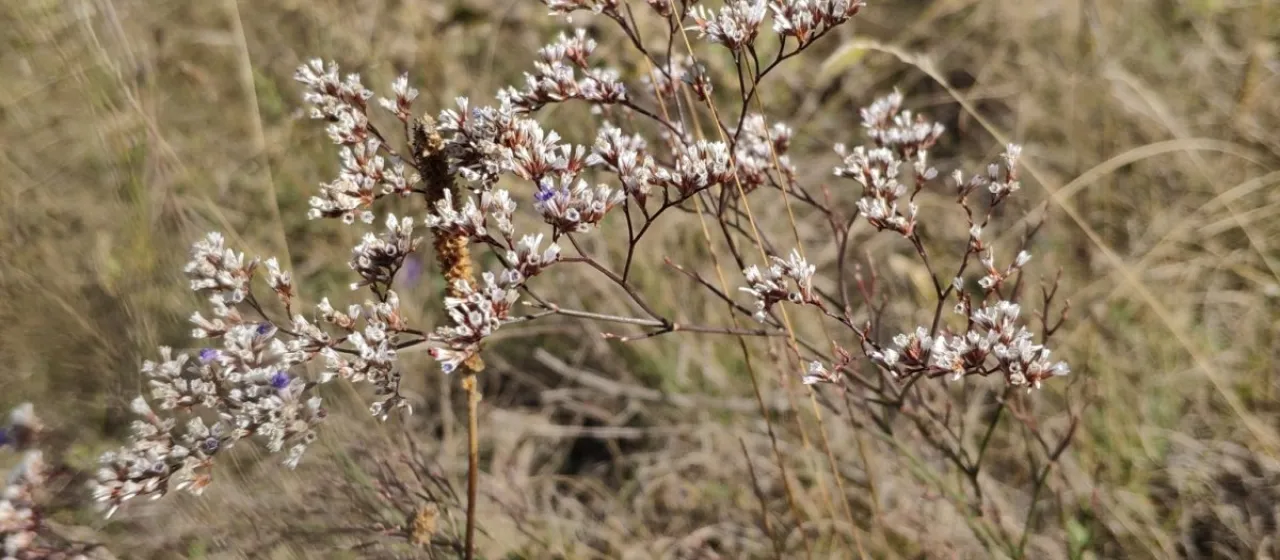
Description
Bunge's Sea Lavender (Limonium bungei) is a perennial herbaceous plant belonging to the Plumbaginaceae family. Known for its ability to thrive in challenging environments, this species is well-adapted to saline soils and arid conditions, acting as a natural halophyte.
Originating from the desert and semi-desert regions of Central Asia, this species has naturally evolved to withstand prolonged periods of drought. Its native habitat comprises dry steppes and saline flats, which dictates its high resilience to intense solar radiation and minimal annual precipitation levels.
Botanically, the plant features a rosette of basal leaves and a sturdy taproot system. The flowering stems are highly branched, bearing numerous small flowers that retain their structure and color long after maturity. This characteristic makes it an excellent choice for ornamental gardening and preservation purposes.
The cultivation requirements for Limonium bungei focus on site selection with excellent drainage. It thrives in sandy or well-draining loamy soils with a slightly alkaline pH. Excessive irrigation is generally detrimental, as the plant prefers dry conditions and can quickly succumb to root rot if placed in waterlogged soil.
Economically, Bunge's Sea Lavender is highly valued in the floriculture industry, particularly for dried flower arrangements and professional floral design. Because its flowers do not fade easily and maintain their form, it is an essential crop for growers of everlasting plants. It is also used in xeriscaping to reduce water consumption in landscaping.
- Sun exposure: Requires full, direct sunlight.
- Soil type: Poor, well-draining, sandy soils preferred.
- Maintenance: Low; drought-tolerant once established.
- Pests: Aphids may appear in greenhouse environments.
- Diseases: Susceptible to fungal root pathogens if overwatered.