
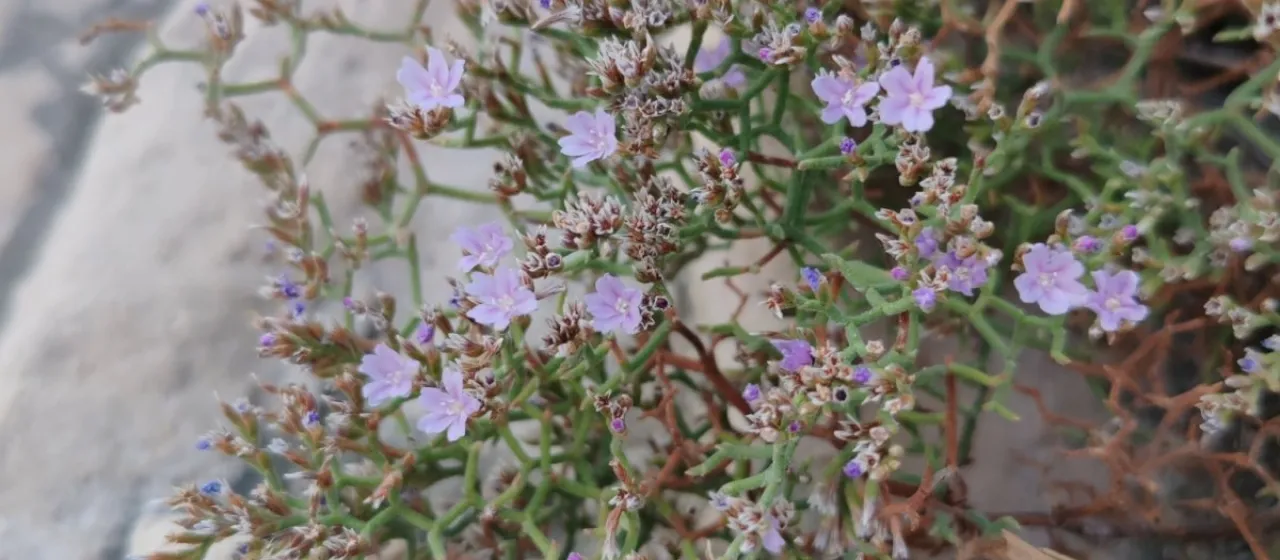
Description
Limonium cancellatum is a perennial herbaceous plant classified within the Plumbaginaceae family. As a specialized halophyte, it is biologically adapted to thrive in highly saline environments, making it a distinctive subject for ecological studies and specialized horticultural applications.
The species originates from the Mediterranean basin and the Balkan Peninsula, naturally occurring in coastal rocky areas and saline soils. Its native habitat provides critical insights into its physiological needs, specifically its inherent tolerance to osmotic stress and coastal winds.
Botanically, the plant develops a basal rosette of leaves and produces an intricate, branched inflorescence resembling a lattice structure. The flowers are small and papery in texture, which allows them to retain their aesthetic form long after drying, a quality highly valued in floriculture.
Agronomic requirements are focused on mimicking its native environment. The plant demands full solar exposure and exceptionally well-drained, porous soils. It is notably drought-resistant and performs poorly in humid, clay-heavy substrates, which can lead to root degradation.
In terms of practical use, Limonium cancellatum is primarily utilized in xeriscaping, rock gardens, and for the production of high-quality dried flowers. It remains relatively free of major pests, provided the cultivator maintains appropriate soil moisture levels to prevent fungal infections that target the roots in stagnant water conditions.
Cultivators should avoid excessive fertilization, as this species is adapted to nutrient-poor soils. Proper spacing is essential to ensure adequate air circulation around the rosette, reducing the risk of powdery mildew during particularly humid periods, although the plant is generally robust in Mediterranean-like climates.