
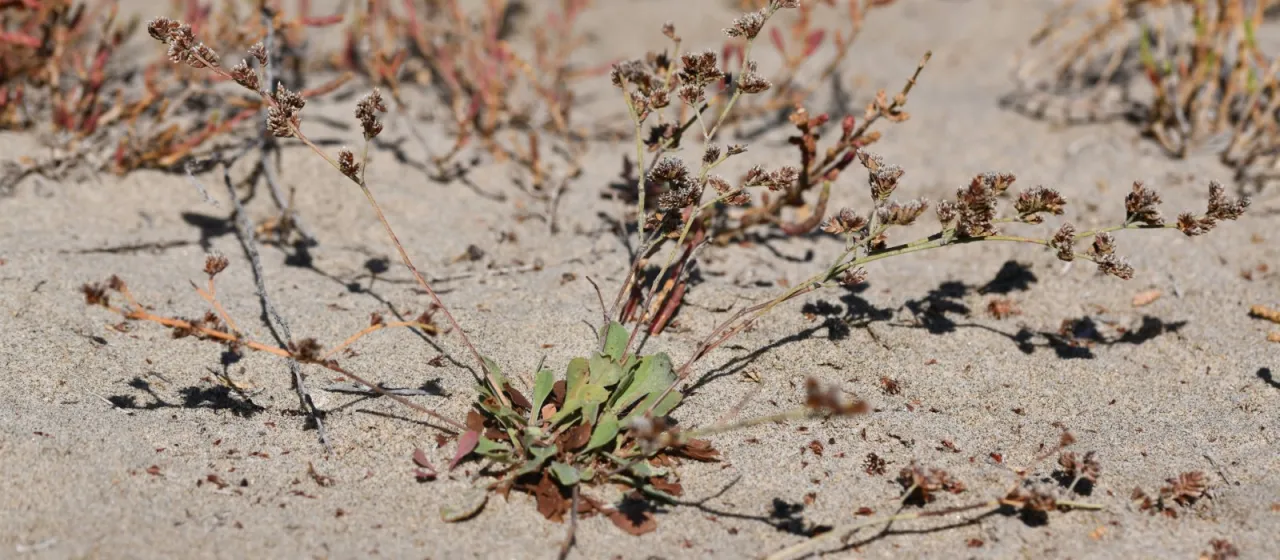
Description
Girard's statice (Limonium girardianum) is a perennial herbaceous plant belonging to the Plumbaginaceae family. It is a specialized halophyte, meaning it has evolved to thrive in environments with high salinity, such as coastal rocky areas and salt marshes, where most other plants would struggle to survive.
The plant is native to the Mediterranean region, particularly coastal areas in southern France. Its habitat is characterized by intense solar radiation, prolonged droughts, and poor, mineral-rich soils. These natural conditions have resulted in a plant that is highly efficient in water usage and tolerant of harsh, unamended growing environments.
Botanically, it features a basal rosette of leathery, lanceolate leaves and tall, branching inflorescences. The flowers are small, typically pale or lavender-hued, and arranged in dense clusters along the stems. Its root system is deep and tap-rooted, ensuring the plant can access moisture even during the peak of the dry season.
Cultivation requires replicating these specific conditions: full sun exposure is non-negotiable for healthy development. The soil must be well-drained and alkaline. Heavy or waterlogged soils are detrimental, as they often lead to oxygen deficiency and the rapid development of pathogens in the root zone, ultimately killing the plant.
In landscaping, Girard's statice is highly valued for its ability to grow in areas that are otherwise difficult to cultivate, such as sandy coastal borders or rock gardens. It also serves as a significant dried flower crop. Once harvested and dried properly, the inflorescences maintain their color and architectural shape for extended periods, making them ideal for floral arrangements.
- Exceptional tolerance to salinity.
- Strict requirement for sharp drainage.
- High preference for solar exposure.
- Low fertilization requirements.
Disease management is primarily focused on preventing root and crown rot, which are common if the plant is overwatered or kept in stagnant humidity. Typical pests include aphids and spider mites, which are most active during dry, hot spells; regular monitoring of the foliage is recommended to maintain the aesthetic quality of the plants.