
Description
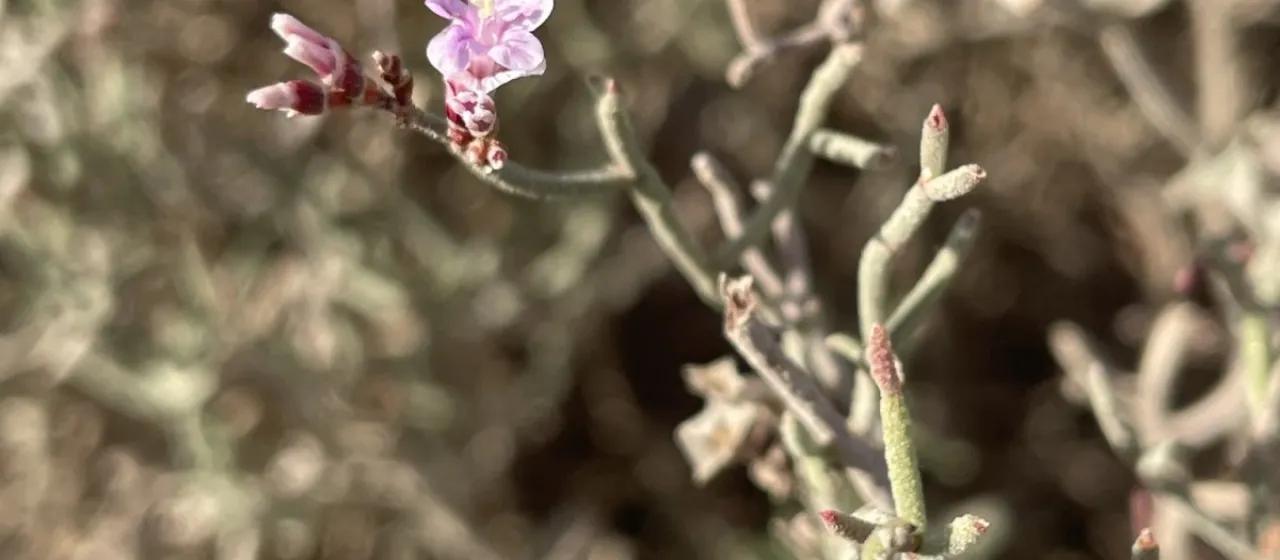
Mealy sea-lavender (Limonium pruinosum) is a perennial subshrub belonging to the Plumbaginaceae family. It is well-known for its distinctive mealy, frosted appearance, caused by specialized salt glands on the surface of its leaves and stems. This trait allows the plant to thrive in saline environments where many other species would fail to survive.
The plant is native to the arid coastal and semi-desert regions of the Mediterranean and the Middle East. It has evolved to survive in harsh, high-salinity habitats. Because of its natural origin, the crop is highly drought-tolerant and requires full sun exposure to maintain its compact growth habit and vibrant inflorescence development.
Botanically, it features a deep taproot system designed to access limited water resources. The inflorescence is a branched panicle of tiny flowers that exhibit papery bracts. These bracts persist for a long time, allowing the plant to retain its structural integrity even after flowering, which is a key trait that makes it commercially valuable.
Agronomic management requires sandy, well-draining soil with a neutral to alkaline pH. Irrigation should be applied sparingly, as waterlogging is the primary cause of plant death. Good air circulation is essential to prevent fungal outbreaks. The crop is largely maintenance-free once established, provided it is planted in an environment mimicking its native coastal habitat.
The primary economic use of Limonium pruinosum is in the ornamental sector, particularly as a dried flower crop.
- Use in professional floristry as a durable filler.
- Landscape design for low-water and coastal gardens.
- Stabilization of saline soils in reclamation projects.