
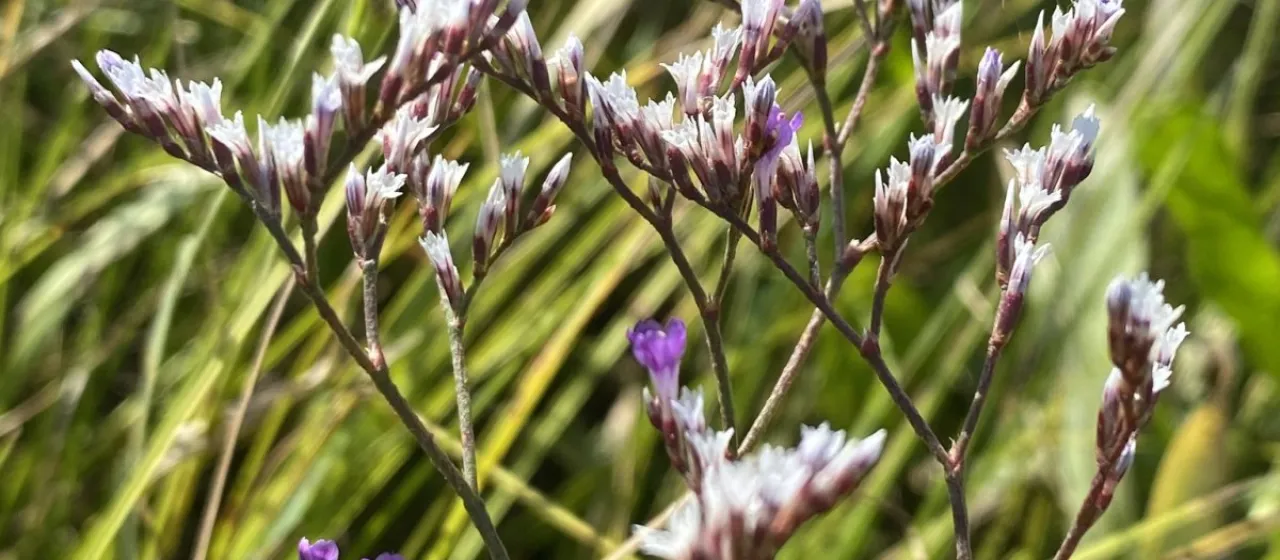
Description
Sareptan sea-lavender (Limonium sareptanum) is a herbaceous perennial plant belonging to the Plumbaginaceae family. This species is highly valued in horticulture and agriculture for its aesthetic appeal as a dried flower and its remarkable ability to thrive in challenging environments where other crops fail.
The plant originates from the arid steppe and semi-desert regions of Eurasia. Its natural habitat includes saline soils and dry, rocky slopes, which has defined its biological adaptation to high salinity and water scarcity. This resilience makes it an interesting subject for studies in sustainable xerophytic crop production.
Botanically, the plant is characterized by a strong taproot, a basal rosette of leathery leaves, and branched flowering stems. The inflorescences consist of numerous small flowers that retain their color and structure for months after harvest, making them ideal for commercial production of dried flower arrangements.
Cultivation requires well-drained, sandy or loamy soil and full sun exposure. The agrotechnics of Limonium sareptanum center on avoiding overwatering, as the plant is highly susceptible to root diseases under anaerobic, wet conditions. Supplemental irrigation is only necessary during the initial establishment phase.
The primary economic use for Sareptan sea-lavender is in the floriculture industry, where it serves as a staple material for dry bouquets. Furthermore, the plant contains significant levels of tannins, which have been explored for potential use in natural dye production and pharmaceutical applications.
- Exceptional drought tolerance.
- Excellent adaptation to saline soil conditions.
- Low maintenance and fertilizer requirements.
- High market value as a persistent dried flower crop.
Common phytosanitary issues are primarily fungal in nature, specifically root rots caused by excessive soil moisture. Pest pressure is generally low, though growers should monitor for aphids during the active growth period. Proper site selection and drainage management are the most effective preventive measures.