
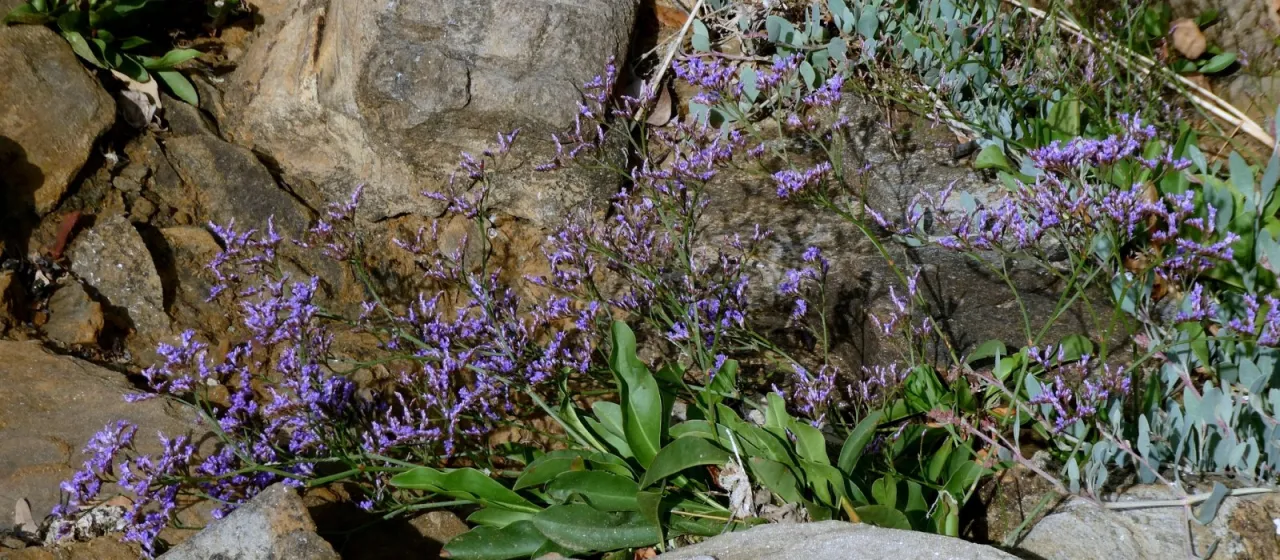
Description
Sea lavender (Latin: Limonium vulgare) is a perennial herbaceous plant belonging to the Plumbaginaceae family. In agricultural and horticultural contexts, it is highly valued for its exceptional ability to thrive in saline environments, making it a unique candidate for cultivating on coastal or degraded soils that are otherwise unsuitable for traditional crops.
The plant originates from the coastal regions of Europe and the Mediterranean. Throughout its evolutionary history, it has adapted to salt-marsh conditions and alkaline soil compositions. Its cultivation is strategically important for land reclamation projects and for diversifying floral production in regions where soil salinity restricts the growth of more sensitive botanical species.
Botanically, sea lavender is characterized by a basal rosette of leathery, deep-green leaves and branched, woody-based flower stalks. The tiny flowers are arranged in dense clusters that maintain their structural integrity and color intensity long after the harvest. Its root system is deep and expansive, providing excellent drought tolerance and stability against strong winds commonly found in coastal habitats.
Successful commercial production depends on strictly managed conditions:
- Sunlight: Full exposure is essential; the plant requires intense light to produce vibrant flowers.
- Soil: Well-drained sandy or gritty soils are mandatory to prevent root rot.
- Watering: Careful moisture control is necessary; drought is preferred over waterlogging.
- Temperature: High heat tolerance makes it suitable for summer growth in various climate zones.
The primary economic use of sea lavender is in the dried flower industry. Its stems are prized by florists for their longevity, vibrant appearance in bouquets, and ease of preservation. Beyond the ornamental sector, it serves a functional role in landscape architecture, helping to stabilize sandy soil and prevent erosion in areas where common turf grasses would fail to establish.
Common health issues include fungal diseases such as powdery mildew, which often develops if air circulation is insufficient. Pests such as aphids and spider mites can occasionally affect the foliage, particularly under hot and dry greenhouse conditions. Effective agronomic management, involving proper spacing and integrated pest management (IPM) practices, is essential to maintain high-quality yields throughout the growing season.