
Description
Common toadflax (Linaria vulgaris Mill.) is a perennial herbaceous plant belonging to the Plantaginaceae family. In agronomic contexts, it is widely recognized as a persistent and invasive weed that colonizes agricultural fields, meadows, and disturbed lands due to its aggressive vegetative propagation.
Native to Europe and temperate Asia, this species has successfully naturalized across North America and other regions. It thrives in various environments, showing a preference for open, sun-exposed areas and well-drained soils. Its ability to colonize fallow fields and roadsides makes it a significant management challenge for farmers and land managers alike.
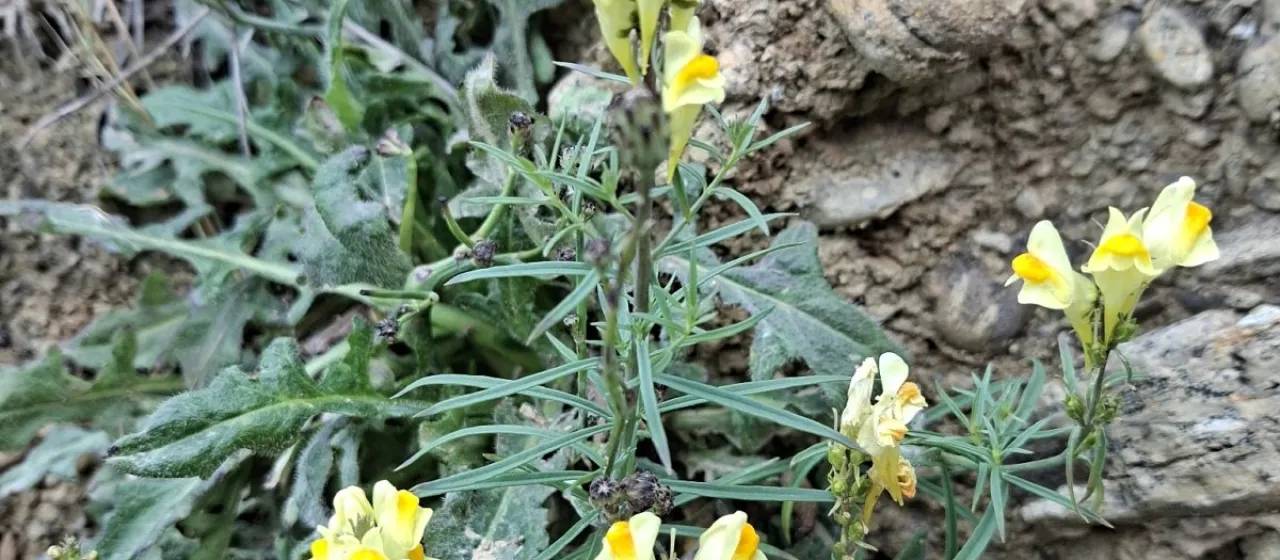
Botanically, the plant is characterized by its snapdragon-like yellow flowers with orange centers and narrow, linear leaves. It reproduces via both seeds and an extensive underground root system. A single plant can produce thousands of seeds that remain viable in the soil for several years, while the horizontal creeping roots ensure the plant can survive mechanical damage and regenerate effectively.
- Requires consistent mechanical control.
- Effective suppression through crop rotation.
- Systemic herbicide application is often necessary.
- Deep tillage helps reduce root biomass.
From an agricultural standpoint, common toadflax is considered a competitor for soil moisture and nutrients in crops. While it possesses historical medicinal value due to its diuretic and laxative properties, it is classified as mildly toxic to livestock. Therefore, monitoring its presence in hay fields is essential to prevent ingestion by cattle, horses, or sheep.
Effective management requires an integrated approach. Because the roots penetrate deep into the soil profile, simple surface cultivation often fails to eradicate the population. Integrating competitive crop cover, timely herbicide application targeting the root system, and maintaining soil health are the most reliable methods to prevent the widespread infestation of this perennial species in commercial farming.