
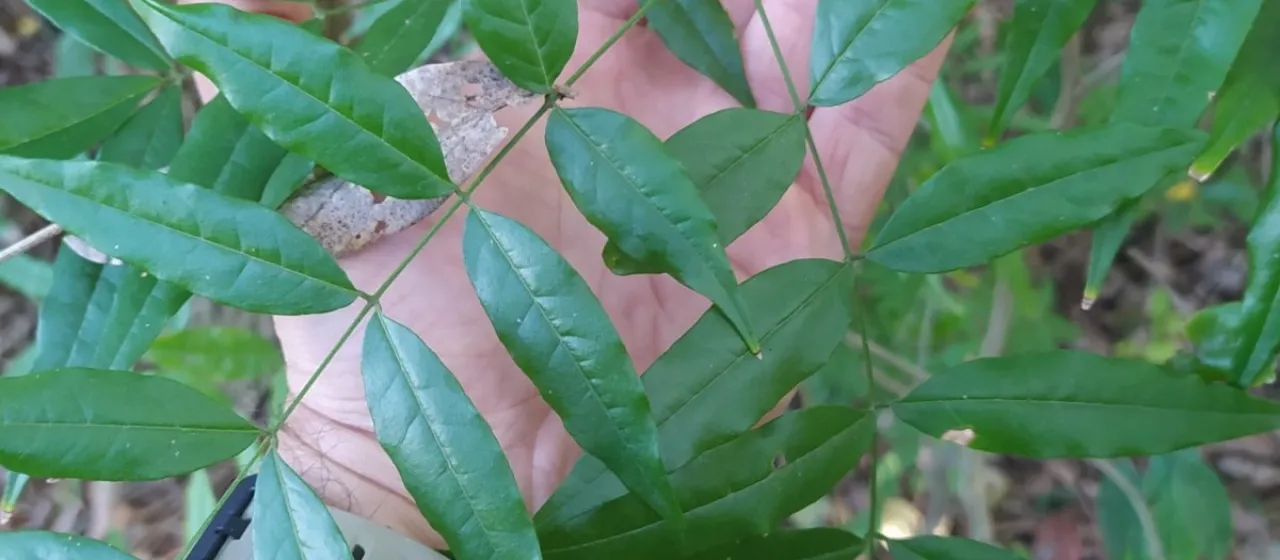
Description
Lonchocarpus nitidus is a woody plant species belonging to the Fabaceae family. As a significant member of the tropical flora, it exhibits characteristics typical of legume trees, providing ecological value through nitrogen fixation and potential economic value through its chemical constituents.
The origin of Lonchocarpus nitidus is rooted in the tropical regions of the Americas. Its natural range encompasses habitats with humid climates, often found in tropical forests and forest margins. It is well-adapted to high humidity levels and requires stable, warm temperatures to thrive in its native ecosystems.
Botanically, this species is defined by its glossy, pinnate leaves, which contribute to its common nomenclature. The plant typically presents as a tree or large shrub with a robust root system. Its reproductive structures consist of characteristic legume flowers arranged in racemes, followed by pod-type fruits that contain the seeds for propagation.
Regarding agronomic requirements, the species favors deep, well-draining soils with a neutral pH. It is particularly sensitive to waterlogging, which necessitates careful soil management in agricultural settings. While young plants require partial shade to establish, mature specimens exhibit moderate resilience and can tolerate full solar exposure in appropriate tropical environments.
Economically, Lonchocarpus nitidus is often associated with the production of botanical insecticides due to the presence of secondary compounds like rotenone in its tissues. Beyond its chemical utility, it is also utilized in agroforestry systems to improve soil fertility and as an ornamental component in tropical landscaping due to its structural aesthetic.
Common phytosanitary issues include potential infestations by leaf-eating insects and various fungal diseases that thrive in high-humidity conditions. Maintaining plant health requires routine monitoring of foliage and ensuring adequate air circulation around the canopy to minimize the impact of pathogens.