
Description
Mariscus radians is a perennial herbaceous plant belonging to the Cyperaceae family. In agricultural science, it is recognized for its durability and adaptation to challenging environmental conditions, making it a subject of interest for forage production systems in arid and semi-arid climatic zones.
The plant originates from tropical and subtropical regions of Africa and parts of Asia. It has successfully adapted to areas with erratic rainfall patterns, allowing it to maintain ground cover and biomass production during periods when sensitive crops would fail due to water stress or high temperatures.
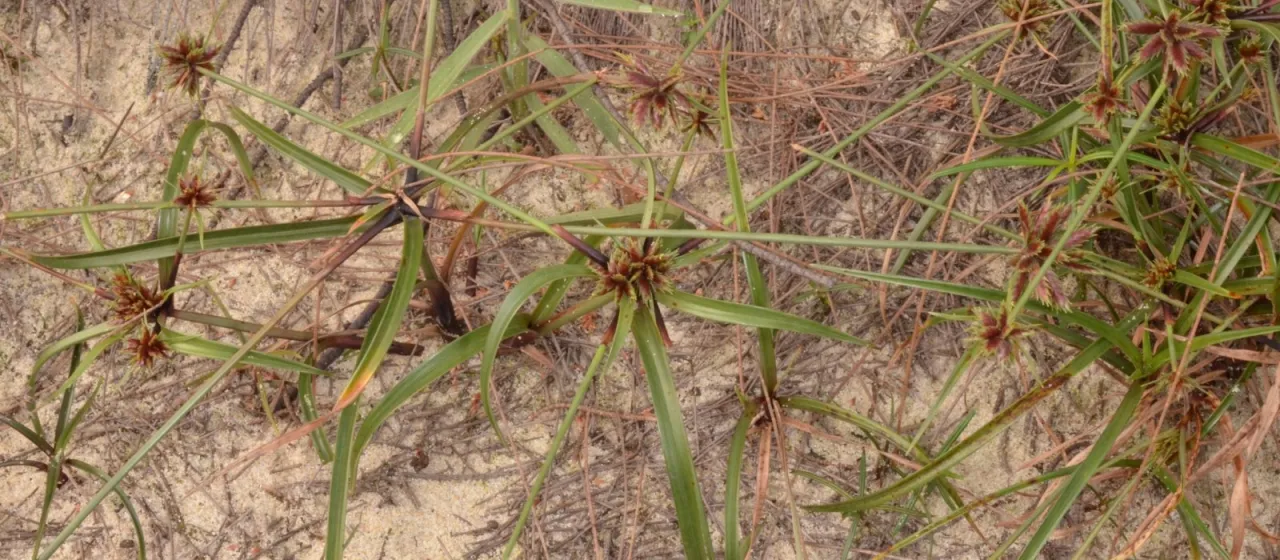
Botanically, Mariscus radians is characterized by a strong rhizomatous root system and stiff, narrow leaves arranged in a basal rosette. The inflorescences are distinct, umbel-like structures from which the species name radians is derived, providing a specific architectural feature that helps in identification and ecological classification.
Agronomic requirements are focused on well-drained, sandy or light-textured soils that allow for rapid root penetration. Effective management involves regulating grazing intensity to ensure the health of the rhizomes, which are essential for the plant's regrowth capabilities throughout the growing season.
The primary economic use of the crop is in livestock grazing and hay production. While the forage may be coarser than traditional pasture grasses, its nutritional value is significant if harvested during the early stages of maturity. Farmers should be aware of potential issues with fungal leaf diseases and insect pests, which require systematic monitoring to preserve yields.