
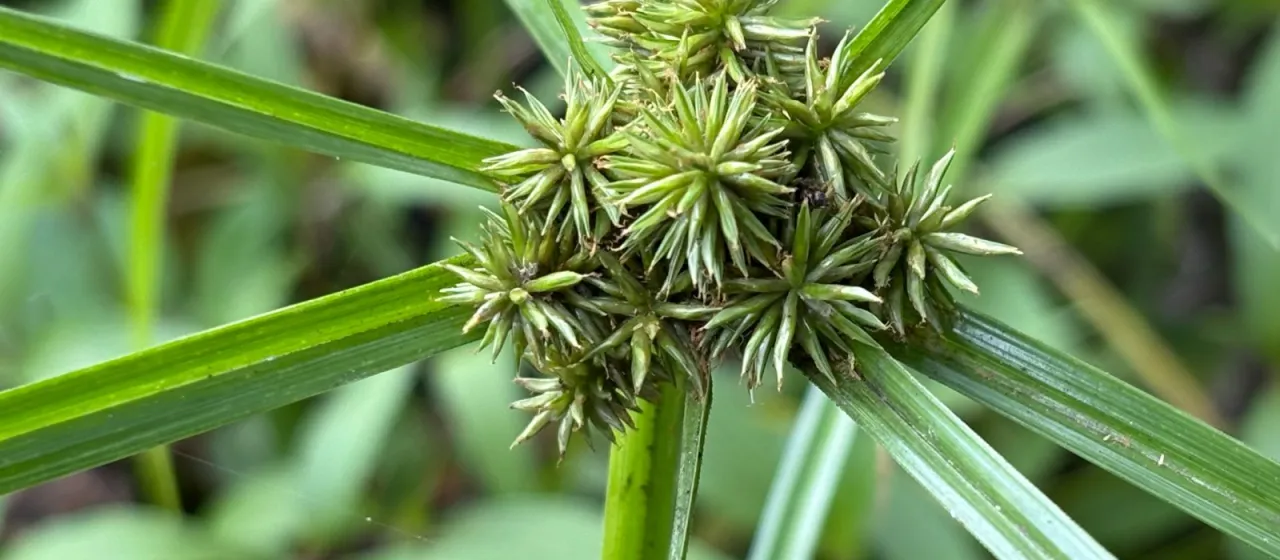
Description
Mariscus sieberianus is a perennial herb belonging to the Cyperaceae family. In agricultural science, it is recognized as a robust member of the sedge family, often evaluated for its potential in sustainable pasture management and its capability to thrive in diverse ecological niches.
The plant originates from tropical and subtropical regions across Africa, Asia, and parts of the Pacific. Its natural distribution is largely concentrated in moist environments such as riverbanks, wetlands, and seasonally flooded grasslands, reflecting its high requirement for soil moisture and humidity.
Botanically, the plant is characterized by a dense growth habit with stiff, linear leaves and strong, fibrous root systems. The inflorescence typically forms terminal umbels. This structure provides significant biomass, which is the primary reason for interest in its cultivation for soil conservation and forage purposes.
Regarding climate and soil requirements, Mariscus sieberianus prefers well-drained but consistently moist soils with neutral to slightly acidic pH levels. While it tolerates a variety of soil types, including sandy loams, it thrives best under full sun exposure with adequate nitrogen availability during the active growing season.
Agricultural and economic applications focus on its role as a hardy forage crop and a plant for erosion control. Its dense root network is highly effective at stabilizing soil on slopes and along waterways. Typical pests include specific aphids and grass-dwelling insects, while diseases are generally limited to fungal pathogens such as rusts or mildews, often triggered by stagnant moisture.