
Description
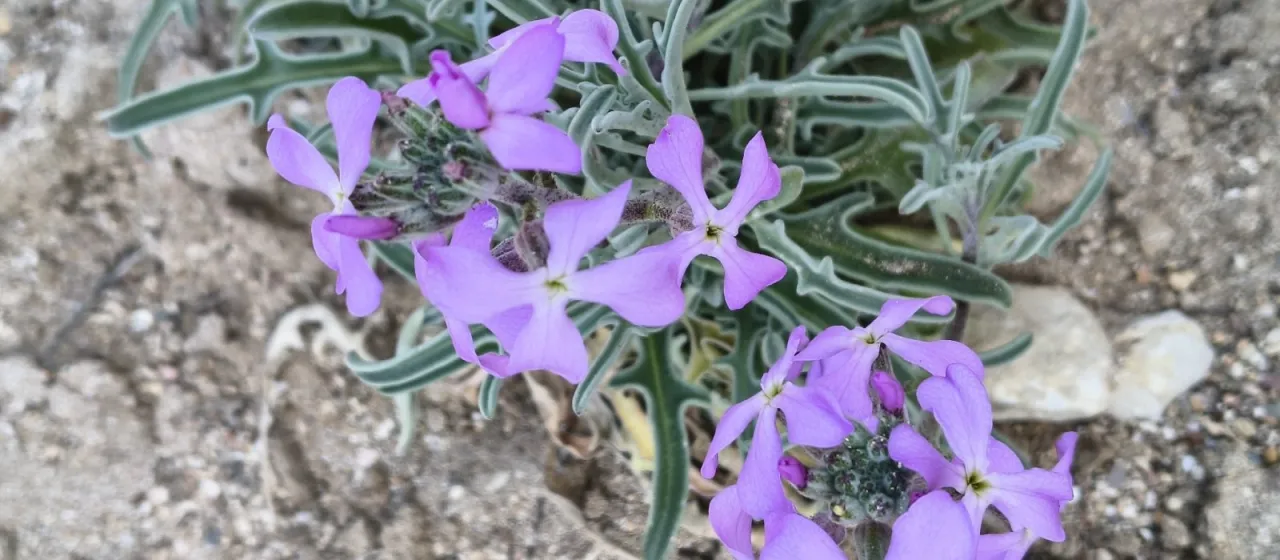
Sea stock (Matthiola sinuata) is a herbaceous plant belonging to the Brassicaceae family. It is widely recognized for its beautiful, scented flowers and its ability to thrive in coastal environments. As a hardy biennial or perennial, it serves as an excellent decorative plant, particularly in regions that mimic its natural seaside habitat.
The native range of Matthiola sinuata is primarily located along the coastal regions of Western Europe and the Mediterranean basin. Due to its evolutionary adaptation to maritime conditions, this plant is remarkably resilient to wind and salt spray. It prefers sandy or gritty soil substrates that provide excellent drainage, reflecting its origins in dunes and cliffs.
Botanically, Sea stock is defined by its tomentose (hairy) foliage, which features distinctively wavy or sinuate leaf margins. The plant grows in clumps or stems, producing fragrant purple or mauve flowers arranged in terminal racemes. This dense hair covering on leaves and stems is a specialized adaptation to reduce transpiration and protect the plant from harsh coastal winds.
For successful cultivation, Sea stock requires a sunny location and soil with superior drainage properties. Heavy or waterlogged soils are detrimental to its health. Essential care practices involve moderate irrigation, keeping the surrounding area free of competing weeds, and applying balanced fertilizers during the growth phase to ensure robust flowering. It is vital to avoid overhead watering to prevent foliage diseases.
Management of pests and diseases is crucial for maintaining the plant's health. The most significant issues often encountered include:
- Flea beetles causing significant damage to seedling foliage.
- Root rot caused by excessive soil moisture and poor drainage.
- Aphid infestations that cluster on developing buds.
- Powdery mildew outbreaks during periods of high humidity and poor air circulation.