Monoao
Dacrydium kirkii
Description
Monoao, scientifically classified as Dacrydium kirkii, is a fascinating coniferous species belonging to the Podocarpaceae family. Often overlooked in commercial forestry, this tree is highly regarded by botanists and collectors for its distinctive life cycle. As a member of an ancient lineage, it provides crucial insights into the evolutionary history of Southern Hemisphere conifers.
The species is endemic to New Zealand, primarily found in the northern parts of the North Island. It typically thrives in humid forest environments, often occupying niches where moisture availability remains high throughout the year. Its natural habitat includes both lowland and montane forests, showcasing its adaptability to various altitudes within its limited geographic range.
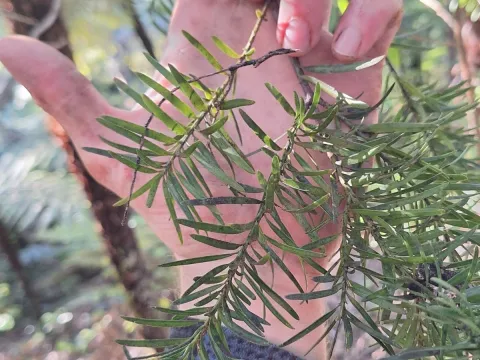
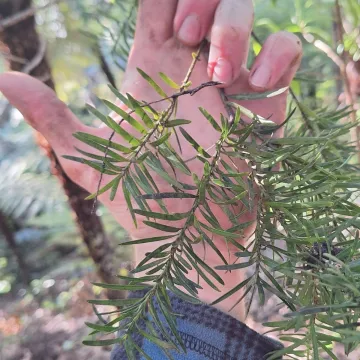
A primary botanical feature of Dacrydium kirkii is its marked heterophylly. The foliage undergoes a significant transformation as the tree matures: juvenile plants produce long, flat, spreading leaves, which eventually give way to small, scale-like leaves in mature specimens. This transition is not only an aesthetic highlight but also a functional adaptation to light and moisture conditions.
Cultivation of Monoao requires careful attention to environmental conditions. It demands well-drained, nutrient-rich soils and a stable, temperate climate. It is particularly sensitive to extreme temperature fluctuations and excessive dryness. When planting, it is recommended to select a sheltered spot that provides partial shade, protecting the tree from harsh winds and intense midday sun.
In terms of management, the main risks involve fungal infections caused by poor drainage or high humidity, as well as common pests like spider mites if the environment becomes too dry. Horticultural use is largely confined to botanical displays and ornamental landscapes in mild climates. Routine care includes balanced fertilization during the growing season and careful monitoring of soil moisture levels to ensure the long-term health of the specimens.
Photo gallery