Pigmy pine
Dacrydium laxifolium Hook. f.
Description
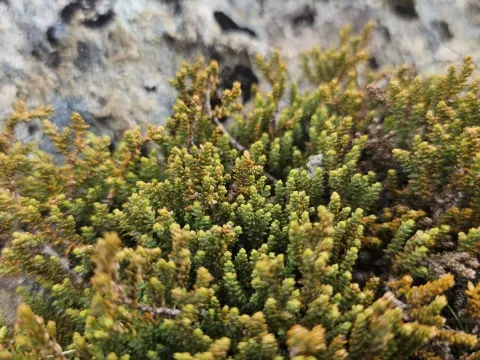
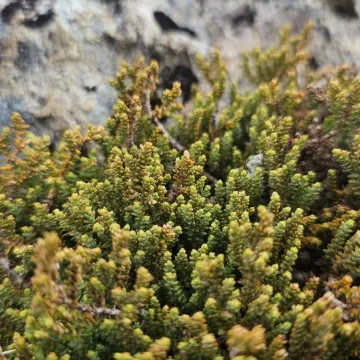
The Pigmy pine (Dacrydium laxifolium) is a remarkable member of the Podocarpaceae family and holds the record for being the world's smallest conifer. Unlike tall forest trees, this species typically grows as a prostrate, mat-forming shrub. Despite its common name, it is not a true pine, but its needle-like foliage and evergreen habit give it a classic coniferous appearance.
Native to the alpine and subalpine regions of New Zealand, this plant has adapted to harsh environmental conditions, including poor soils and freezing temperatures. Its natural distribution is largely restricted to mountainous areas where it thrives in exposed, rocky locations. This evolutionary history dictates its specific needs when brought into horticultural or agricultural settings.
Botanically, the plant is characterized by a very slow growth rate, often spreading horizontally rather than vertically. The foliage is generally olive-green, but it exhibits a unique ability to change color, often turning a rich bronze or copper-red during colder months or when exposed to intense sun. This seasonal color transition adds significant ornamental value to gardens.
Cultivation requires strict attention to soil composition and water management. The species demands an acidic, highly well-drained medium; waterlogged soil is fatal, leading to rapid root rot. While it enjoys cool, humid conditions, it does not tolerate extreme heat or drought. In a garden setting, it performs best in rock gardens or as a specimen in a specialized container that mimics alpine drainage.
While the Pigmy pine is primarily an ornamental crop for niche horticultural markets, it is susceptible to specific pests, most notably spider mites if the air is too dry. Diseases are usually linked to improper drainage or stagnant air circulation. Propagation is difficult and slow, typically involving careful cutting management in professional nurseries, making it a prized and relatively rare plant among conifer enthusiasts.
Photo gallery