
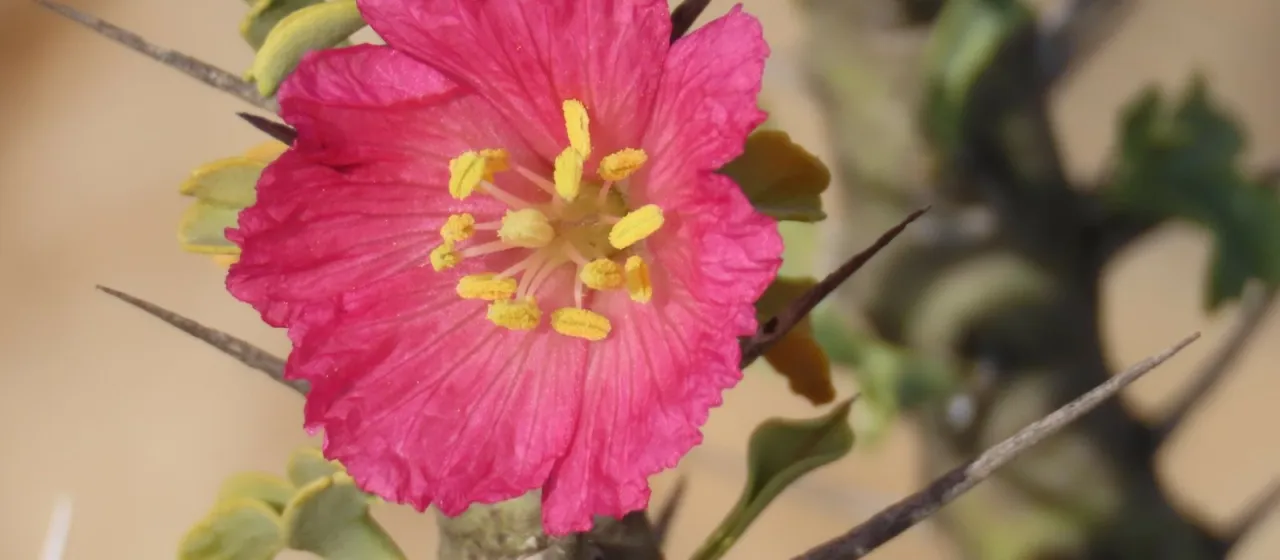
Description
Monsonia patersonii is a fascinating perennial species belonging to the Geraniaceae family. As a caudex-forming succulent, it is highly valued by botanists and enthusiasts for its remarkable adaptation to harsh environmental conditions.
Originating from the arid regions of Southern Africa, particularly parts of Namibia and South Africa, the plant has evolved to thrive in desert-like environments. Its geographical distribution is restricted to areas where low rainfall and well-drained, sandy soils dominate the landscape.
Botanically, the plant is characterized by a thickened, tuberous stem known as a caudex, which acts as a water storage organ. The foliage often features fine hairs, a structural adaptation that helps minimize transpiration. The reproductive organs produce small yet distinct flowers consistent with the morphology of other members within the Geraniaceae family.
Cultivation requirements for this species include excellent drainage and a substrate mimicking its native soil composition. Growers must prioritize intense sunlight to ensure healthy growth and prevent etiolation. Water management is critical; the plant requires a strictly dry resting phase to prevent root rot and physiological stress.
- Requires high levels of sunlight exposure.
- Needs highly porous, mineral-rich soil mix.
- Sensitive to overwatering during the dormant period.
- Susceptible to mealybugs and fungal pathogens in humid conditions.
The primary use of Monsonia patersonii is within the specialized nursery trade and as a botanical specimen in arid-zone collections. Typical health issues include potential infestations by sucking insects and root rot caused by stagnant moisture. Maintaining proper ventilation and careful observation are the foundations of successful plant health management.