
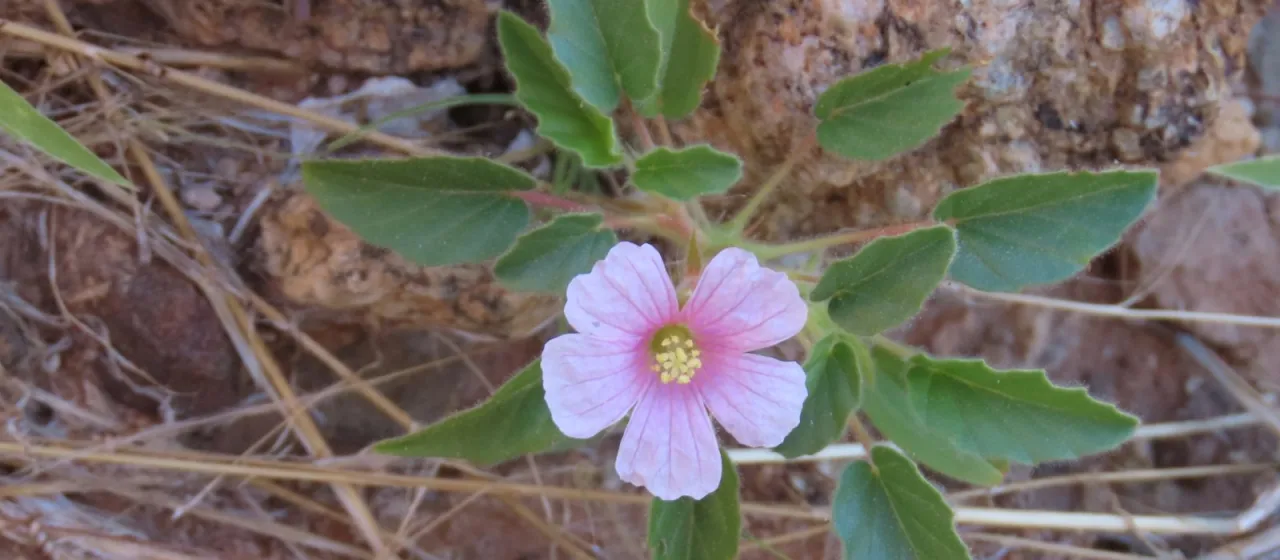
Description
Monsonia senegalensis is an annual herbaceous plant belonging to the Geraniaceae family. This species is well-regarded for its remarkable adaptability to arid environments, functioning as a resilient component of desert and semi-desert ecosystems where moisture availability is highly unpredictable.
The plant originates from the dry regions of Africa, extending its range across the Arabian Peninsula to parts of India. It typically inhabits sandy soils, gravel plains, and open savanna areas. Its geographical distribution confirms its status as a specialized species capable of enduring intense heat and prolonged dry spells.
Botanically, Monsonia senegalensis presents as a low-growing, branched herb. Its foliage is often adapted to reduce transpirational loss, and its reproductive strategy is optimized for rapid flowering and seed production immediately following rare rainfall events. This ensures the survival of the species through prolonged dormant periods within the seed bank.
Cultivation requirements for this species are minimal but specific: it demands high light intensity and excellent soil drainage. Commercial or experimental cultivation is rare, but where attempted, it requires a sandy, nutrient-poor substrate that mimics its natural habitat. Excessive water or poor drainage will lead to root rot, which is the primary challenge in managing this crop.
In terms of practical use, the plant is historically valued in traditional medicine, particularly for its reported antiseptic and anti-inflammatory properties. Beyond its ethnobotanical utility, the species is of interest to researchers studying drought tolerance and desertification control, as its ability to stabilize soil in harsh conditions offers potential for ecological restoration projects.
- Extreme drought resistance
- Optimal growth in well-drained, sandy soils
- Rapid germination cycle
- High tolerance to intense UV radiation