
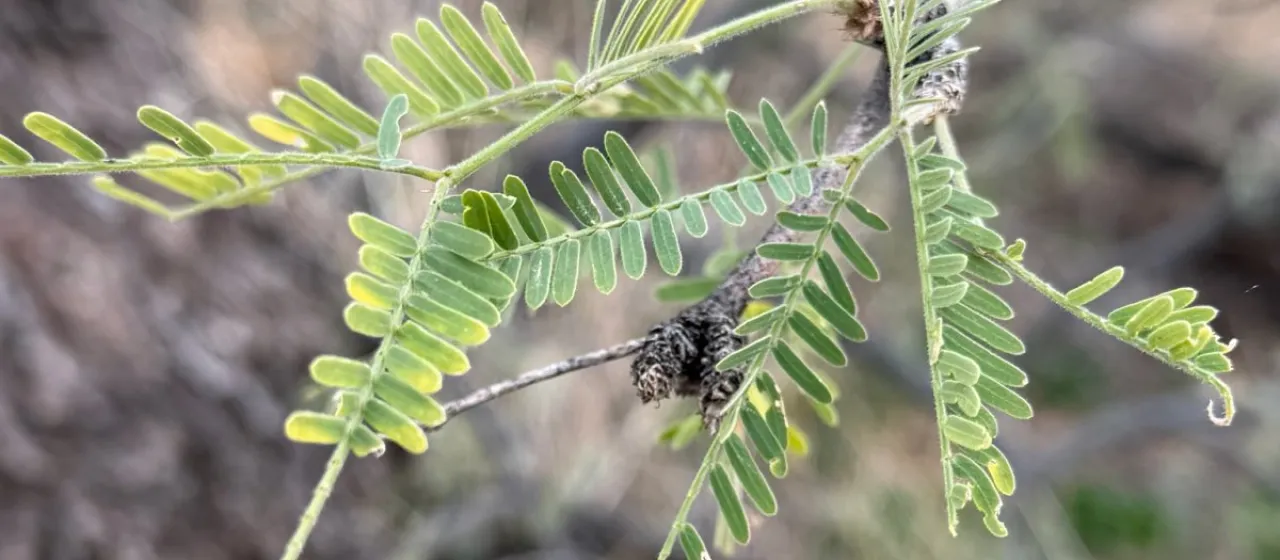
Description
Velvet mesquite (Neltuma velutina), formerly classified as Prosopis velutina, is a leguminous tree native to the southwestern United States and northwestern Mexico. It is a highly resilient species, essential for the arid ecosystems where it thrives by utilizing deep taproots to reach groundwater.
The plant is categorized under the Fabaceae family. Its common name, "velvet" mesquite, refers to the fine, dense pubescence covering its leaflets, which helps the tree conserve water by reducing transpiration rates during the harsh, high-temperature summers characteristic of its native habitats.
Botanically, the tree exhibits a wide, spreading crown and produces long, pod-like fruits. These pods are rich in nutritional value, containing sugars and proteins, which makes the plant a significant resource for local wildlife and domestic livestock management in semi-arid zones.
Regarding cultivation, Neltuma velutina is notably drought-tolerant and thrives in a variety of soil conditions, ranging from deep alluvial soils to more compacted or alkaline substrates. Successful establishment requires protection during the initial growth phase, but mature trees are extremely low-maintenance, requiring no irrigation once established.
- Fixation of nitrogen to enhance soil fertility.
- Resistance to most common agricultural pests and fungal diseases.
- High-quality, slow-burning firewood production.
In agriculture, the velvet mesquite is primarily valued for its role in soil stabilization, acting as an effective windbreak and erosion control agent. Its fruit pods are often harvested for fodder, providing a supplementary food source for cattle during dry seasons, while the tree also serves as an important nectar source for pollinators.