
Description
Nonea calycina is an annual herbaceous plant belonging to the Boraginaceae family. In agronomy, it is primarily categorized as an opportunistic plant species that may appear in agricultural fields, pastures, and disturbed landscapes, demonstrating a high level of ecological plasticity.
Originating from the Mediterranean basin and parts of Central Asia, this species has spread throughout various arid and semi-arid regions. It is well-adapted to environments with low annual precipitation and high levels of solar irradiance, making it a characteristic component of steppe floras and surrounding agricultural buffers.
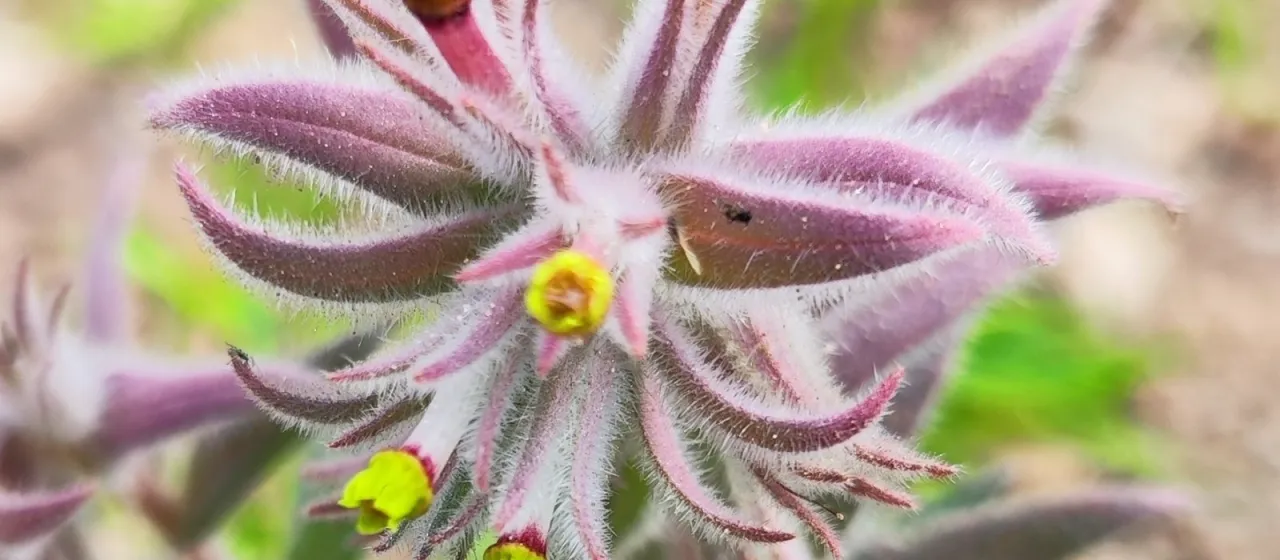
The botanical structure of the plant consists of a bristly, branched stem covered in trichomes, which protect the plant from excessive moisture loss. The leaves are generally lanceolate and arranged in an alternate pattern. Its taproot system is relatively deep for an annual, allowing it to survive through brief periods of drought during the growing season.
Regarding cultivation requirements, Nonea calycina thrives in well-drained, porous soils with a neutral or slightly alkaline pH. It does not require high levels of nitrogen or organic fertilization to complete its life cycle. Agrotechnical control measures, when needed, usually involve pre-sowing tillage and the implementation of crop rotation strategies to minimize the soil seed bank.
From a utilization perspective, the plant is recognized for its potential as a nectar-producing source for pollinators. However, it is largely studied for its biological interactions within agroecosystems. Common pests include various coleopteran insects (leaf beetles), while potential fungal diseases usually involve root or leaf spot pathogens that occur in high-humidity or poorly drained areas.