
Description
Yellow monkswort (lat. Nonea lutea) is an annual herbaceous plant belonging to the Boraginaceae family. While it is frequently categorized as an arable weed in agricultural environments, it serves as a subject of interest for botanists and agronomists due to its resilience and its role in early-season ecological niches.
The species originates from Southeastern Europe, the Caucasus, and parts of Western Asia. Its natural habitat includes open, sunny meadows, rocky slopes, and steppe regions. As a ruderal plant, it easily colonizes disturbed soils, field margins, and neglected farmlands, showing a strong adaptation to environments with periodic moisture stress.
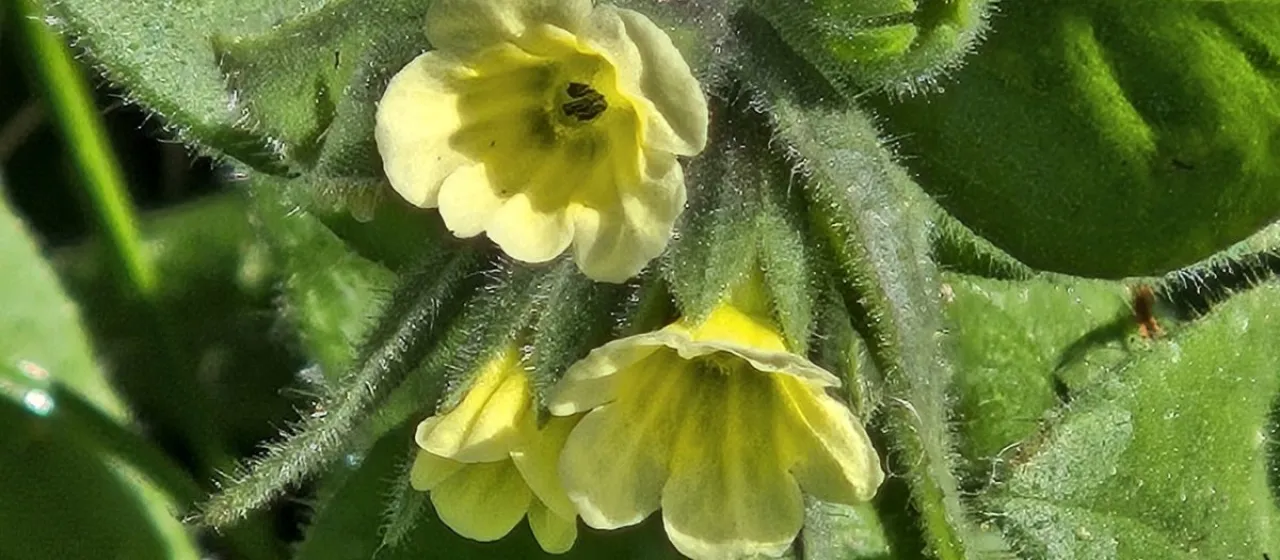
Botanically, Nonea lutea is characterized by a branched stem that can reach heights of up to 50 cm, covered in stiff, coarse hairs. Its leaves are alternate and lanceolate. The plant is best recognized by its small, yellow, tubular flowers arranged in distinct cymes. The root system is taprooted, which allows it to access deep soil water and thrive in rocky or nutrient-poor substrates.
From an agronomic standpoint, yellow monkswort is highly undemanding regarding soil quality. It prefers well-drained soils and can withstand high temperatures and drought conditions. Weed management usually involves conventional mechanical tillage or inter-row cultivation during the early stages of crop development, as the plant spreads predominantly through its prolific seed production.
In terms of practical use, it is often documented as an early-season honey plant, providing crucial forage for pollinators when other sources are scarce. While not a major crop, its presence is significant in biodiversity management. Pathogens such as powdery mildew may affect the plant under high humidity, and various aphids are known to be its primary insect pests in wild populations.