
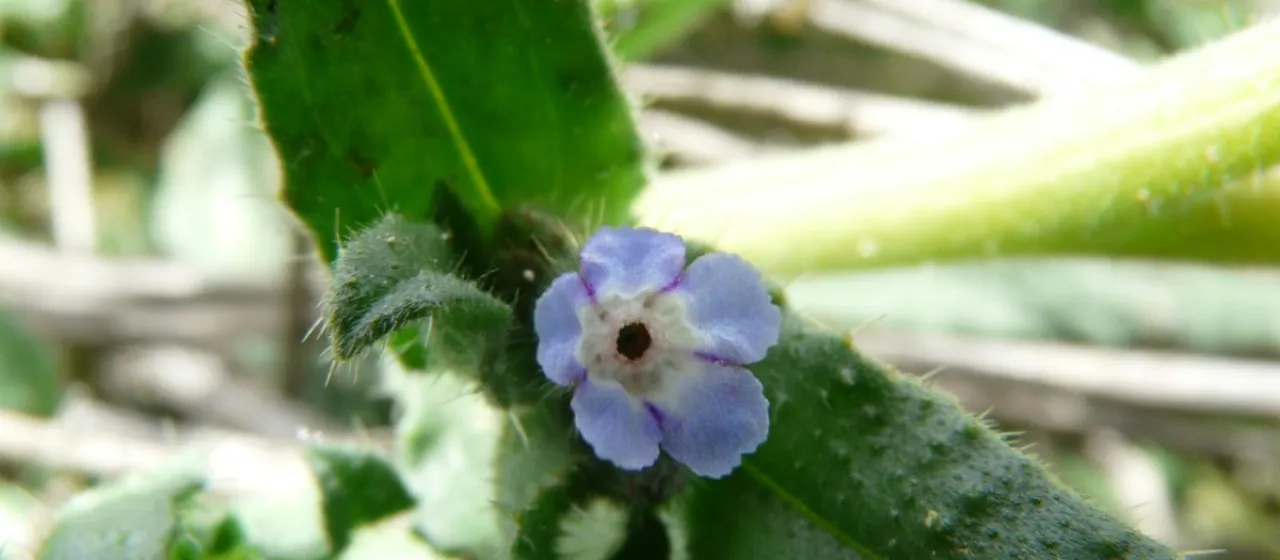
Description
Nonea micrantha is an annual herbaceous plant belonging to the Boraginaceae family. While often categorized within agricultural environments as a weed species, it possesses distinct botanical traits that characterize its adaptation to arid and semi-arid conditions across various landscapes in Eurasia.
The species originates from the temperate and steppe regions of Europe and Central Asia. It is commonly found in open, disturbed habitats such as pastures, roadsides, and abandoned fields. Its natural distribution is largely defined by its ability to thrive in harsh environments where moisture availability and soil nutrient profiles are suboptimal for many traditional crops.
From a morphological perspective, the plant is recognized by its erect, branched stem covered in coarse hairs, which is a hallmark feature of the Boraginaceae family. The leaves are simple and alternate, while the inflorescences consist of numerous small, often yellowish or brownish flowers. This structure is highly efficient for seed production, allowing the plant to propagate rapidly during short favorable growing windows.
The climatic and soil requirements for this plant are notably flexible. Nonea micrantha exhibits high tolerance to drought, sandy or calcareous soils, and extreme temperature fluctuations. It typically does not require high levels of nitrogen or other fertilizers to complete its life cycle, which demonstrates its evolutionary adaptation to nutrient-poor wild habitats.
Regarding its хозяйственное (economic) potential, the following areas are of interest to researchers:
- Investigation into phytochemical compounds with potential medicinal properties.
- Ecological utility as a nectar source for pollinators in natural rangelands.
- Use in soil conservation projects to stabilize loose surfaces against wind erosion.
The plant is occasionally susceptible to standard agricultural pests, including aphids and various lepidopteran larvae. Disease management usually involves general phytosanitary measures. In professional agricultural settings, control of Nonea micrantha as a weed is achieved through integrated pest management (IPM) practices, including mechanical weeding and rotation strategies to prevent seed bank accumulation in the soil.