Hairy-spiked lousewort
Pedicularis dasystachys
Description
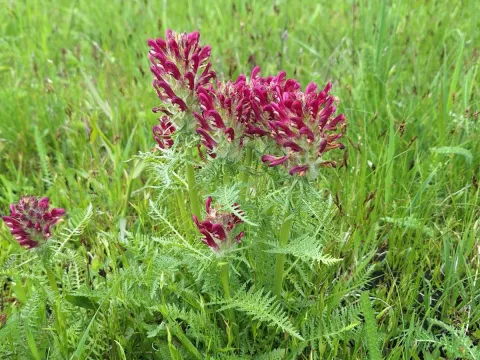
The Hairy-spiked lousewort (Latin: Pedicularis dasystachys) is a perennial herbaceous plant belonging to the Orobanchaceae family. It is recognized for its unique biological nature as a root hemiparasite, meaning it derives nutrients from host plants via specialized haustoria while maintaining its ability to perform photosynthesis.
The native distribution area of this species is primarily located in Siberia and parts of Central Asia. The plant thrives in moist meadows, riparian zones, and floodplains. In agricultural terms, it is considered an important component of natural grasslands, contributing to the structural and biological diversity of the ecosystem.
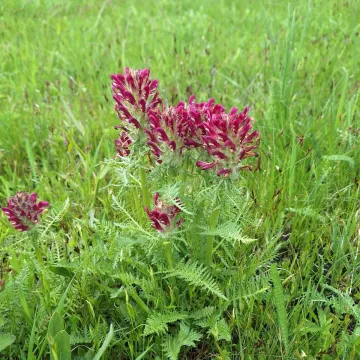
Botanically, Pedicularis dasystachys is characterized by a stout, erect stem and dense, pubescent inflorescences that resemble a hairy spike, which serves as a protective mechanism for the flowers. Its leaves are pinnately lobed and arranged in a rosette or alternate pattern along the stem, allowing for efficient energy capture in its natural habitat.
Agrotechnical requirements for this plant focus on soil moisture stability and the presence of suitable host vegetation. Because it is hemiparasitic, cultivation is complex and generally depends on preserving natural meadows rather than intensive crop farming. It prefers neutral to slightly acidic, nutrient-rich soils that maintain moisture throughout the growing season.
Economically, the species is primarily studied for its potential pharmacological properties, specifically its iridoid glycoside content, which is researched for sedative and anti-inflammatory uses. In livestock farming, it is generally treated with caution, as high concentrations of its secondary metabolites can be unpalatable or toxic to grazing animals, requiring careful management of pasture quality.
Common issues affecting this species include:
- Susceptibility to fungal root diseases in waterlogged conditions.
- Predation by specific insect species adapted to chemical defenses.
- Declining populations due to intensive nitrogen fertilization of meadows.
- Invasive species displacement in disturbed ecological zones.
Photo gallery