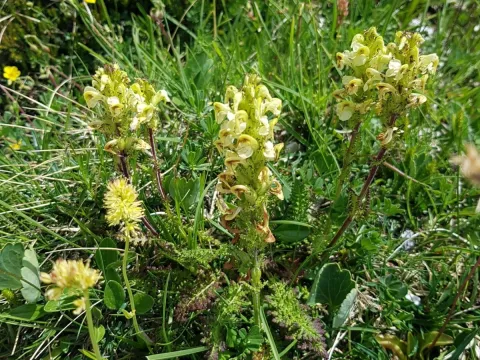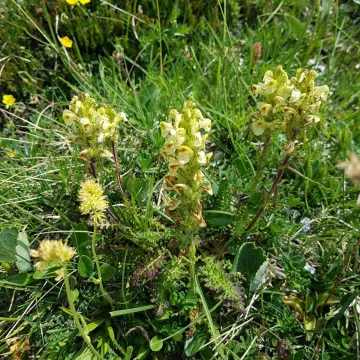
Fern-leaved lousewort
Pedicularis elongata
Description
Fern-leaved lousewort (Pedicularis elongata) is a perennial herbaceous plant belonging to the Orobanchaceae family. It is recognized as a hemiparasite, meaning it possesses chlorophyll and can perform photosynthesis while simultaneously tapping into the root systems of host plants to extract essential nutrients and water, allowing it to thrive in nutrient-competitive environments.
The species is primarily native to mountainous regions in Southern Europe and the Alps. It naturally occurs in moist subalpine meadows and mountain pastures. Its distribution is limited to specific ecological niches where the soil remains moist throughout the brief growing season and where its host plant species are abundant.
The plant's common name stems from its distinctive, finely dissected, fern-like foliage. The plant produces dense, spike-like racemes of complex, hooded flowers. These flowers are highly specialized and rely on specific insect pollinators, primarily bumblebees, which have the physical strength to access the nectar housed within the floral tube.
Regarding ecological requirements, Pedicularis elongata demands consistent soil moisture and a specific companion plant community. It does not perform well in cultivated settings due to its obligate reliance on host roots for part of its nutrient uptake. Consequently, attempts to cultivate this species for agricultural purposes are rarely successful or intended.
In terms of health and sustainability, the main risks to this plant are environmental degradation and changes in land management. Agricultural practices that involve extensive drainage of alpine meadows or shifts in livestock grazing intensity can significantly disrupt the fragile balance between the parasite and its hosts, leading to a decline in population density.
Photo gallery