Description
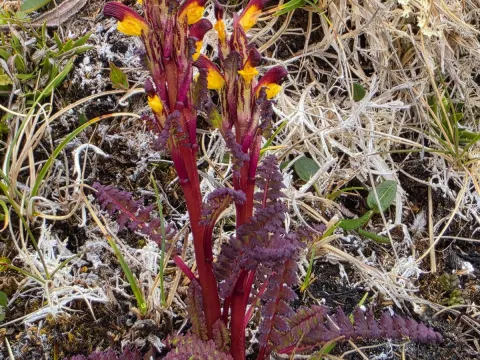
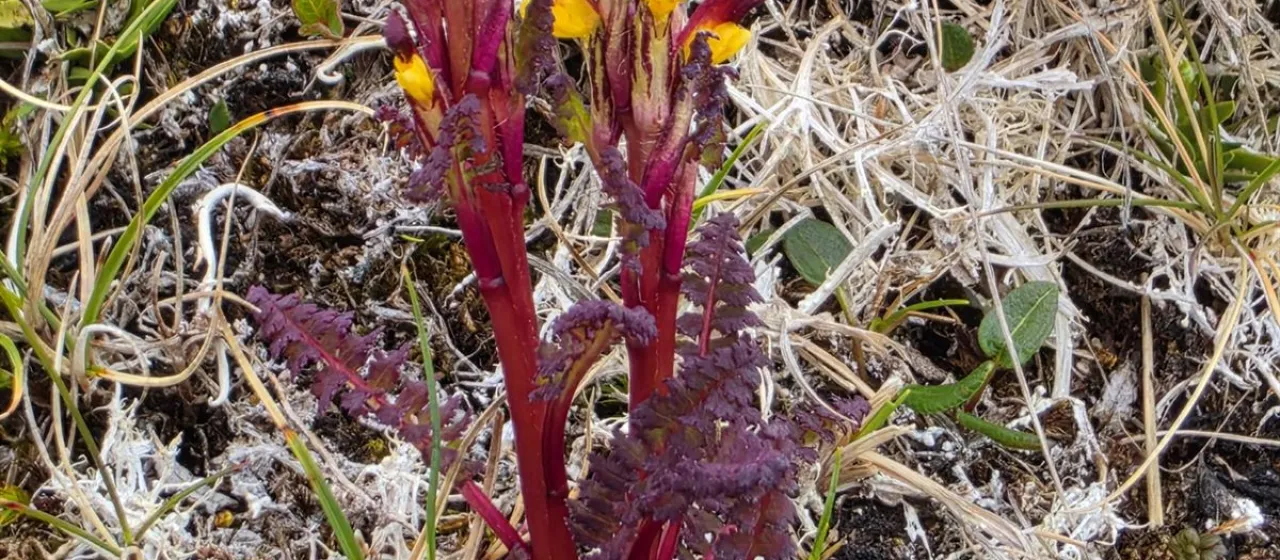
The flame-colored lousewort (Pedicularis flammea) is a perennial herbaceous plant belonging to the family Orobanchaceae. It is a hemiparasite, meaning it can perform photosynthesis due to its chlorophyll content, but it simultaneously extracts water and essential nutrients from the roots of neighboring plants, particularly sedges, by using specialized root structures called haustoria.
The species is primarily distributed throughout the arctic and subarctic regions of the Northern Hemisphere, including Greenland, northern Scandinavia, and parts of North America. It is perfectly adapted to cold-climate ecosystems such as alpine meadows, tundra heaths, and moist, rocky ground, where it plays a critical role in nutrient cycling within its immediate vegetation patch.
Botanically, it features a small, sturdy stem reaching 5–15 cm in height with pinnate leaves forming a basal rosette. The inflorescence is a dense spike of brilliant yellow or orange-red flowers, which are structurally complex and highly adapted to specific pollinators, such as bumblebees, that operate in cold, windy arctic environments.
Regarding its requirements, the plant thrives in acidic to neutral, moist, and well-drained soils. It requires cold winters and cool, short summers for its life cycle completion. Agricultural cultivation of this species is generally not practiced, as its reliance on host plants makes it impractical for standard crop management; it is strictly a wild species preserved in its native habitat.
The plant has limited commercial utility but remains significant for botanical research regarding hemiparasitism and arctic plant succession. Typical threats include habitat loss due to climate warming and fungal infections that arise during unusually humid spells. Pests are usually confined to specialized larvae of insects that consume the plant's tissues, though these are rarely a limiting factor for the population's survival.
Photo gallery