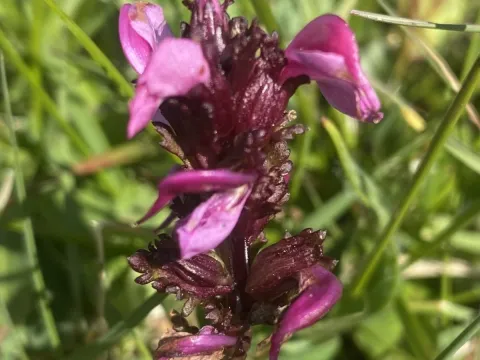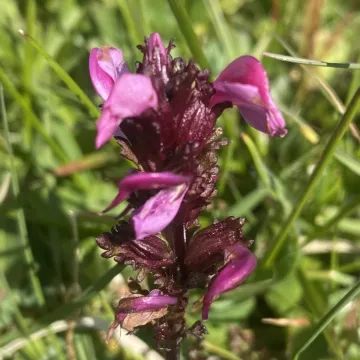
Nordmann lousewort
Pedicularis nordmanniana
Description
Nordmann lousewort (Pedicularis nordmanniana) is a perennial herbaceous plant belonging to the Orobanchaceae family. Unlike conventional crops, it is a specialized botanical species that has evolved to survive in challenging mountain environments, displaying unique physiological traits.
The origin of this species is linked to the high-altitude meadows of the Caucasus and Anatolian regions. It thrives in subalpine zones where the climate is characterized by short growing seasons, cool temperatures, and consistent soil moisture, reflecting its adaptation to undisturbed natural habitats.
Botanically, this species is defined as a hemiparasite. It possesses chlorophyll and can perform photosynthesis, but it supplements its nutrient intake by attaching to the roots of host plants via haustoria. This complex ecological strategy makes it a subject of interest for plant biologists studying plant-to-plant interactions and root ecology.
Regarding cultivation requirements, Nordmann lousewort is not suitable for standard agricultural production. It demands highly specific soil conditions, typically acidic or neutral mountain soils with excellent permeability. Standard synthetic fertilizers are detrimental to the plant, as it relies on specific soil microorganisms and host plant associations to flourish.
While the plant does not have commercial agricultural uses, it plays a vital role in local ecosystems. Diseases and pests affecting this species are primarily those common in high-altitude environments, such as fungal pathogens favored by excessive dampness. Conservation efforts focus on protecting its natural habitat, as the plant remains sensitive to ecological changes in its native mountain ranges.
Photo gallery