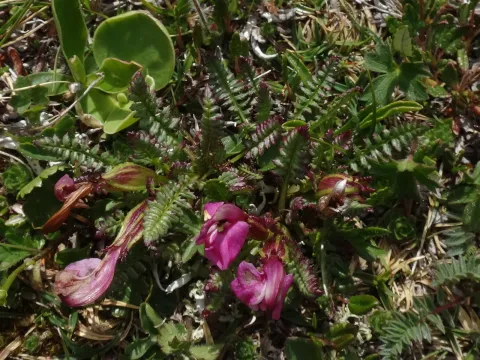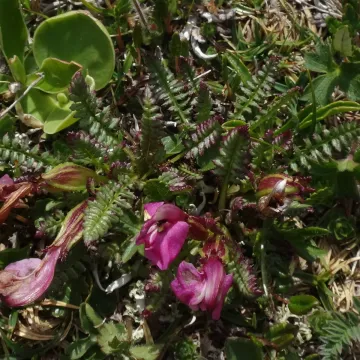
Pedicularis portenschlagii
Pedicularis portenschlagii
Description
Pedicularis portenschlagii is a perennial herbaceous plant belonging to the Orobanchaceae family. While not a conventional agricultural crop, it is a specialized botanical species often studied for its hemiparasitic nature and its adaptation to extreme alpine environments, making it a subject of interest for rare plant enthusiasts.
The plant originates from the high-altitude regions of the South-Eastern Alps. Its native habitat consists of rocky slopes, screes, and alpine meadows where the climate is characterized by short summers and freezing temperatures. This geographical origin dictates the plant's sensitivity to environmental changes and its specialized growth requirements.
Botanically, this species is defined by its ability to extract nutrients and water from neighboring plants through root connections known as haustoria. It features a compact rosette of finely divided leaves and a floral stem that produces distinct, colorful inflorescences, which are highly specialized for pollination in harsh mountain climates.
Cultivation requires careful simulation of alpine conditions, including gritty, well-drained, and nutrient-poor soils. Proper air circulation and high light exposure are essential for the plant's vigor. Growers must ensure the presence of suitable host species, as the plant relies on them for optimal growth and nutrient uptake, especially in restricted containers or rock gardens.
The primary use of Pedicularis portenschlagii is within botanical collections and rock garden design. Key management concerns involve preventing root rot caused by poor drainage or excessive soil moisture during the dormant season. Typical pests include aphids and soil-borne pathogens, which require preventative management to avoid significant damage to the plant's delicate root system.
Photo gallery