Pedicularis recutita
Pedicularis recutita
Description
Pedicularis recutita, commonly known as the beaked lousewort, is a herbaceous perennial belonging to the Orobanchaceae family. This species is recognized as a hemiparasite, meaning it is capable of photosynthesis while simultaneously deriving water and minerals from the root systems of surrounding host plants.
The native habitat of this plant spans the subalpine and alpine zones of European mountain ranges. It thrives in humid, nutrient-rich soils often found in mountain meadows and edges of marshes. It is specifically adapted to environments with short growing seasons and cold, snowy winters.
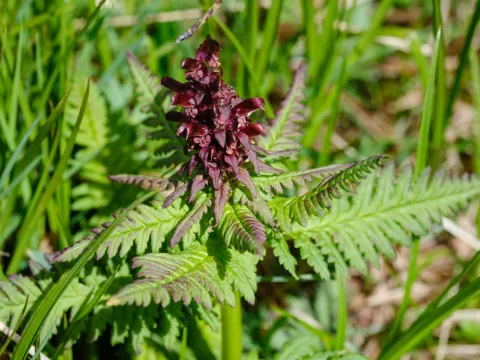
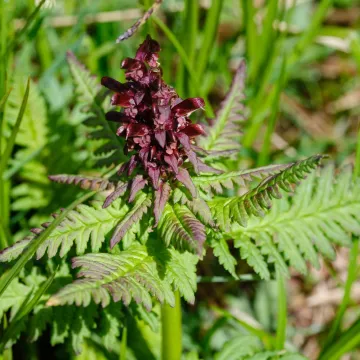
Botanical identification is based on its dense, dark reddish-brown inflorescences and deeply divided leaves along a sturdy stem. The flowers possess a specific structure typical for the genus, attracting specialized pollinators such as bumblebees, which are essential for its reproductive success in the wild.
Agricultural cultivation of this species is highly specialized due to its dependence on host plants. To successfully grow Pedicularis recutita in experimental settings, a stable ecosystem must be established where the plant can establish haustorial connections with appropriate grass or shrub species. Standard monoculture practices are ineffective for this variety.
Potential applications involve the extraction of phytochemicals, as members of the genus Pedicularis have historically been used in folk medicine. Due to its specific requirements and slow growth rate, it is not considered a traditional agricultural commodity, but rather a plant of scientific and ecological interest for future pharmaceutical research.
Photo gallery