Description
Tuberous lousewort (lat. Pedicularis tuberosa) is a perennial herbaceous plant belonging to the Orobanchaceae family. As a hemiparasite, this species has evolved to rely partially on the root systems of other plants to absorb water and mineral nutrients, which makes its biological cycle unique in the field of botany.
The plant is native to the high-mountain regions of Europe, specifically the Alps and the Pyrenees. Its habitat is characterized by alpine meadows and rocky slopes where the species thrives in nutrient-poor but well-drained soils. Its geographical distribution is limited by its specialized ecological requirements and reliance on specific host plants.
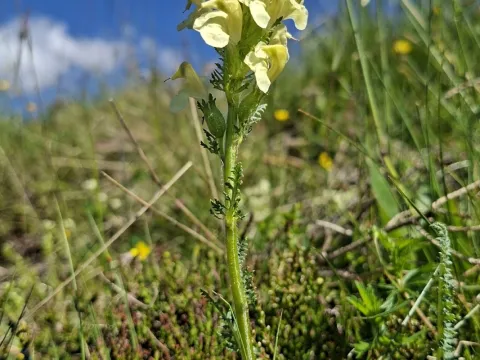
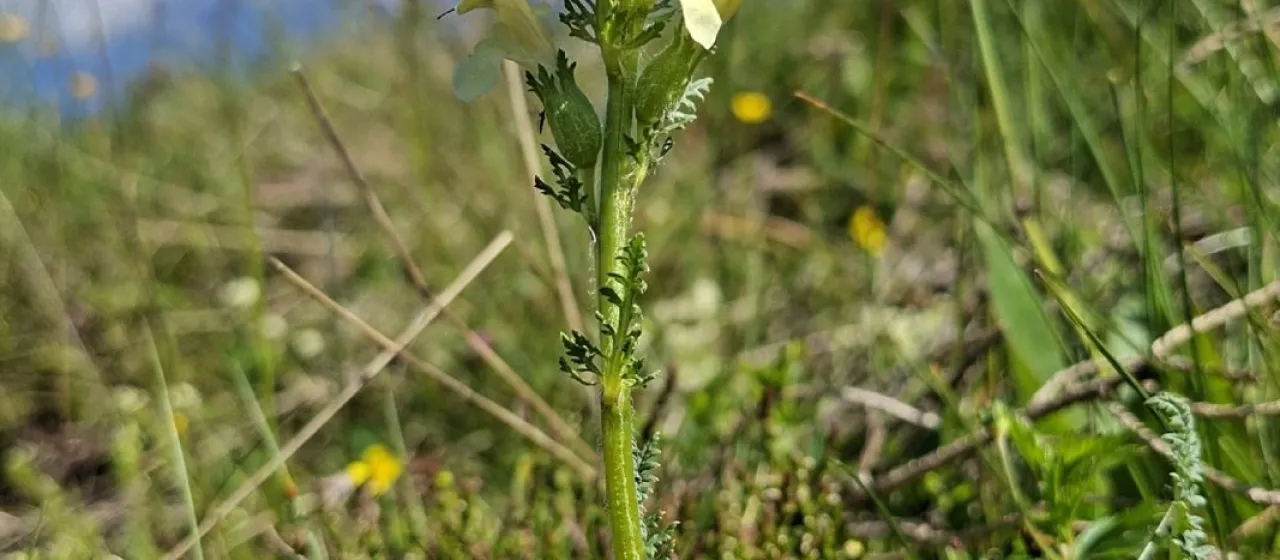
Botanically, Pedicularis tuberosa is distinguished by its thickened, tuberous roots that serve as storage organs. The plant features a rosette of pinnate leaves and terminal racemes of yellow, helmet-shaped flowers. This structure is an adaptation to high-altitude environments, facilitating photosynthesis despite low temperatures and intense UV radiation.
Cultivation of this species is extremely complex and generally not practiced in commercial agriculture. From an agrotechnical perspective, it requires simulating a natural alpine environment with low soil fertility and constant host-plant availability. It does not respond well to standard fertilization, as its development is fundamentally tied to its parasitic mechanism.
Potential risks for the species include fungal infections, particularly root rot, occurring when drainage is insufficient. While not a commercial crop, it is of significant interest for ecological research and conservation. Currently, there are no established pest control protocols for this plant, as it is treated primarily as a wild, protected botanical specimen rather than a crop.
Photo gallery