
Hairy Phoradendron
Phoradendron tomentosum
Description
Hairy Phoradendron (Phoradendron tomentosum) is a perennial, evergreen, hemi-parasitic plant belonging to the Santalaceae family. Unlike conventional agricultural crops, this species acts as a significant parasite, relying entirely on its host trees to supply water and essential nutrients through complex structures known as haustoria, which penetrate the host's vascular system.
The plant is native to North America, widely distributed across the southern United States and Mexico. Its habitat is primarily focused on riparian zones and dry woodlands. In agricultural and forestry sectors, it is considered a problematic organism that infests a variety of hardwood species, including oaks, elms, and fruit trees, potentially reducing their longevity and commercial value.
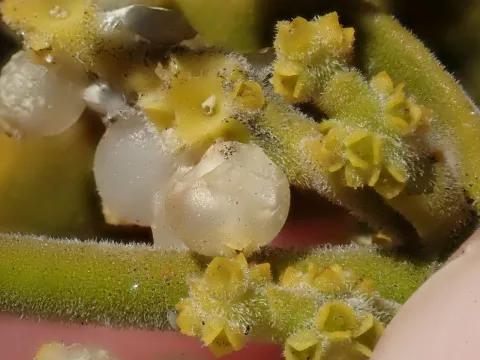
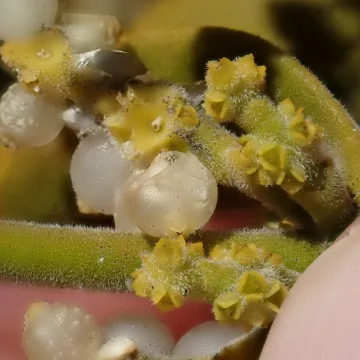
Botanically, the plant is characterized by its small, thick, succulent leaves covered with a fine, velvety pubescence, which gives it a greyish appearance. The plant produces insignificant flowers followed by sticky, translucent berries. These fruits are the primary mechanism for spread, as they are consumed and dispersed by local bird populations, ensuring the colonization of nearby branches.
There are no traditional agricultural cultivation practices for Phoradendron tomentosum, as it is viewed exclusively as a pest. Management strategies are strictly defensive and include regular pruning of infected branches at least 15-30 centimeters below the point of attachment. In severe cases of infestation, removing the entire tree may be necessary to prevent the spread of the parasite to healthy surrounding specimens.
The impact of this plant on trees is profound, leading to severe physiological decline. Infested trees often suffer from stunted growth, reduced nut or fruit yield, and increased susceptibility to secondary diseases and insect pests. Furthermore, the weight of the parasitic clusters makes branches brittle, leading to structural damage during extreme weather events.
Photo gallery