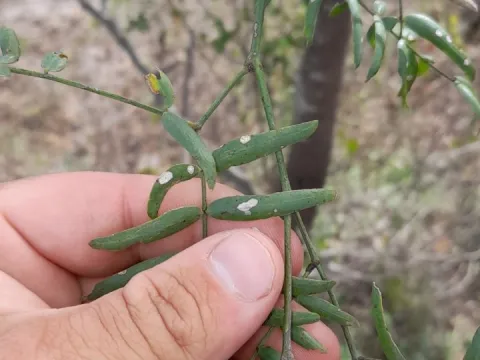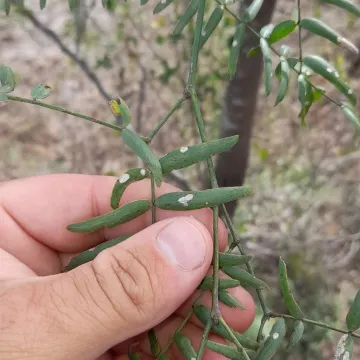
Prosopis hassleri
Prosopis hassleri Harms
Description
Prosopis hassleri is a perennial woody plant belonging to the Fabaceae family. As a highly specialized species, it is known for its remarkable ability to thrive in arid and semi-arid environments, making it a subject of interest for agricultural land restoration and sustainable forage production in challenging climates.
The species originates from South America, with its primary distribution found in Paraguay and northern Argentina. It is a vital component of the local xerophytic ecosystems, where it serves as a keystone species capable of maintaining soil stability and providing resources where other vegetation would fail to establish.
Botanically, this plant displays typical adaptations for water conservation, including deeply penetrating root systems that access moisture from deep water tables. The foliage consists of pinnate leaves designed to withstand high solar radiation, while the reproductive structures produce nutritious pods that are highly sought after in extensive agricultural systems.
Agricultural requirements for Prosopis hassleri are relatively low. It prefers well-drained, sandy or gravelly soils and exhibits high tolerance to soil salinity. Agronomic management focuses on successful seedling establishment, requiring minimal irrigation only during the early stages of growth, followed by natural adaptation to the local environment.
The хозяйственное usage of this crop is multifaceted, primarily focusing on agroforestry, where it is utilized for shade, windbreaks, and nitrogen fixation. The seeds and pods provide valuable forage for livestock, particularly during the dry season when other food sources are scarce. Typical challenges include occasional fungal infections if exposed to prolonged waterlogging or specific insect pests that may target the seed pods.
- Excellent drought and heat tolerance.
- Symbiotic nitrogen fixation capabilities.
- Salt-affected land reclamation potential.
- Nutritional value of pods for livestock.
Photo gallery