Prosopis kuntzei
Prosopis kuntzei Harms
Description
Prosopis kuntzei is a distinct woody plant belonging to the Fabaceae family. Known locally as «itín», this species is a remarkable example of botanical adaptation to hyper-arid environments. It is recognized for its survival strategy, which allows it to thrive in regions where annual rainfall is extremely low and evaporation rates are high.
The native range of this species is centered in the South American Gran Chaco, covering parts of Argentina, Paraguay, and Bolivia. It is a dominant element in the xerophytic forests of these regions, where it has evolved to occupy niches that are inaccessible to more water-demanding crops due to harsh environmental constraints.
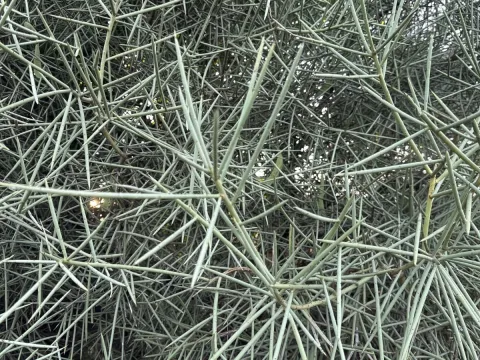
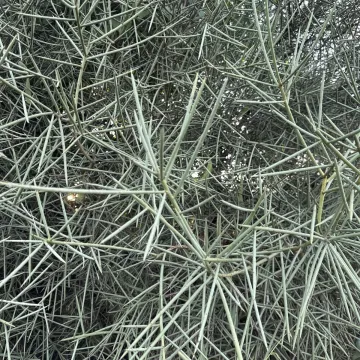
Botanically, Prosopis kuntzei is easily identified by its unique morphology. It is characterized by stiff, green, photosynthetic stems that appear almost leafless, and a dense network of sharp thorns. The tree typically reaches a height of 5 to 10 meters and possesses a deep, invasive root system designed to tap into subterranean water sources that are unavailable to surface vegetation.
Agricultural requirements for this species focus on providing full sunlight and excellent drainage. It is highly tolerant of saline and alkaline soils, which are common in its native range. In terms of agronomic practice, it is valued for its ability to fix atmospheric nitrogen, thereby naturally enriching the soil. It requires practically no irrigation once established, making it a sustainable choice for arid-land reforestation.
Commercial and agricultural utilization includes:
- The production of extremely dense, high-quality timber known for its durability and resistance to decay.
- Use in agroforestry systems to prevent soil erosion and improve biodiversity in drylands.
- Support for apiculture as an important source of nectar in arid areas.
- Utilization as a natural barrier or fencing due to its dense, thorny growth habit.
Regarding health, the tree is relatively robust. Common issues include fungal pathogens that may develop if the soil remains waterlogged, which is detrimental to its health. It is generally resistant to most standard agricultural pests due to the high concentration of tannins and secondary metabolites in its tissues, which act as natural repellents against herbivores and insect attacks.
Photo gallery