Palmer's mesquite
Prosopis palmeri S. Watson
Description
Palmer's mesquite (lat. Prosopis palmeri) is a perennial woody plant belonging to the Fabaceae family, specifically the Mimosoideae subfamily. As an agricultural and botanical specimen, it is recognized for its extraordinary adaptability to extreme desert environments, functioning as both a stabilizer for arid soils and a potential source of biomass.
This species is native to the arid regions of Baja California, Mexico. Its geographic distribution is strictly tied to desert climates where annual precipitation is low, highlighting the plant's evolutionary success in managing water scarcity through specialized physiological mechanisms.
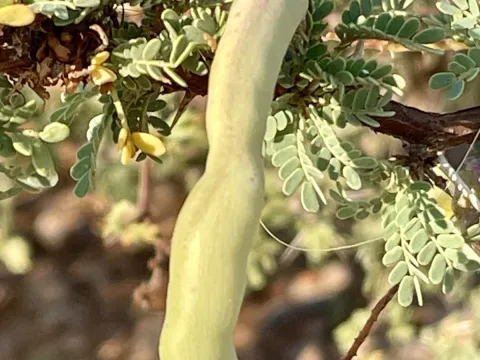
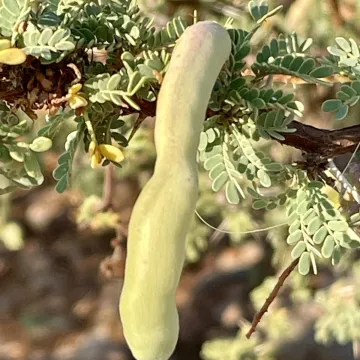
The botanical structure of Prosopis palmeri consists of a deep, aggressive taproot system, feathery compound leaves, and thorny branches that serve as a defense against grazing animals. The plant produces small, fragrant, spike-like inflorescences typical of the genus, followed by pods that house the seeds, which remain viable for long periods under harsh conditions.
Cultivation requirements involve well-drained, sandy, or rocky soil substrates. In an agricultural setting, the plant thrives with minimal intervention, as it is highly sensitive to waterlogging. Fertilization is generally unnecessary, as the plant engages in a symbiotic relationship with nitrogen-fixing bacteria, enriching the substrate in which it grows.
Economically, the species is primarily valued for land rehabilitation, particularly in preventing soil erosion in desertified landscapes. While its fodder potential is moderate compared to other forage legumes, it remains an essential component of local ecosystems. The plant shows high resistance to typical pests and diseases, which is a significant advantage for low-input agroforestry projects.
Photo gallery