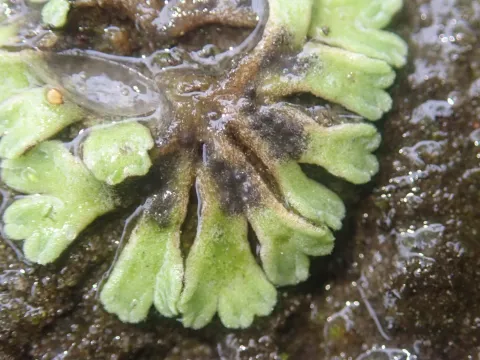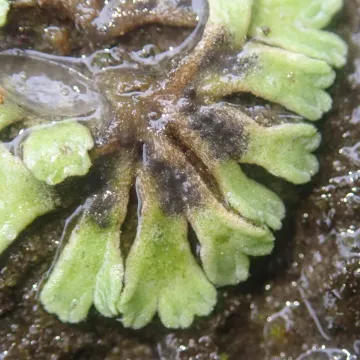
Riccia bifurca
Riccia bifurca
Description
Riccia bifurca is a species of liverwort belonging to the family Ricciaceae. Unlike conventional field crops, this non-vascular plant forms a small, thalloid structure. It is a primitive yet highly adapted organism that thrives in niches where moisture levels fluctuate, playing a foundational role in moisture-retaining soil covers.
The plant is widely distributed across temperate regions of both the Northern and Southern Hemispheres. Its natural range includes damp fields, seasonal pond edges, and disturbed moist soils. It is frequently found in environments where competition from larger vascular plants is limited, allowing it to colonize bare patches of earth effectively.
Botanically, Riccia bifurca is characterized by its dichotomously branched thallus. The plant lacks true roots and instead anchors itself to the substrate via unicellular rhizoids. Reproduction is achieved through the production of spores within the thallus or through vegetative fragmentation, which allows for rapid colonization of suitable moist habitats.
Cultivation requirements focus heavily on hydration and light. Riccia bifurca thrives best in moist, neutral to slightly acidic soils. When managed for controlled environments, it requires protection from excessive desiccation while ensuring adequate airflow to prevent the buildup of stagnant water. It is notably resilient to periodic dry spells due to its dormant phase capabilities.
In terms of хозяйственное (economic/practical) use, Riccia bifurca is a popular choice in aquascaping and experimental biology. It serves as an excellent bioindicator for soil and water quality, showing sensitivity to heavy metals and pesticides. The plant faces few natural pests, though excessive algae growth in aquatic setups can outcompete and smother the thalli, leading to population decline.
Photo gallery