
Clustered dock
Rumex conglomeratus Murray
Description
Clustered dock (Rumex conglomeratus) is a perennial herbaceous plant belonging to the Polygonaceae family. In agricultural contexts, it is primarily recognized as a characteristic component of damp grasslands, wetlands, and riparian zones, where it demonstrates a high capacity for biomass production in heavy, moist soils.
Native to Europe, Western Asia, and North Africa, the species has naturalized globally in temperate regions. It typically occupies ecological niches such as ditches, stream banks, and seasonally inundated pastures. Its presence in agricultural landscapes often indicates areas with poor drainage or high water tables that may require specific management adjustments.
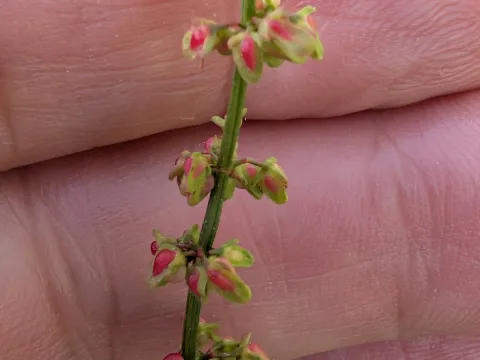
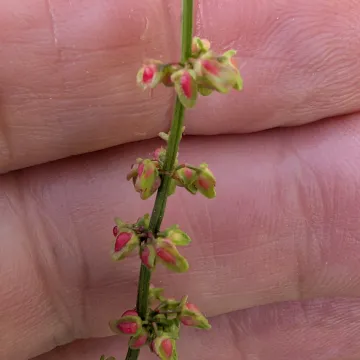
Botanically, the plant develops a robust, branched stem that can reach up to one meter in height. The most distinguishing feature of Rumex conglomeratus is its inflorescence: the flowers are arranged in small, dense, rounded clusters (whorls) that are separated along the main axis. The leaves are generally lanceolate or oblong, often with a cordate base, providing a consistent morphological marker for identification.
From an agronomical standpoint, this species thrives in soils rich in organic matter, particularly heavy clays or silt loams. It requires significant moisture throughout the growing season and shows high tolerance to flooding, which can outcompete less robust fodder grasses. Effective management involves maintaining adequate stocking rates in pastures to prevent the dominance of this species, as it is often considered a weed in improved forage systems.
While not a primary crop, it serves as a source of biodiversity in grazing lands. The plant can be susceptible to common dock diseases, such as leaf rust and various fungal spots. Insect pests, including certain species of weevils and dock beetles, are frequently found feeding on the foliage, which serves as a natural mechanism for population control in its native habitats.
- Adaptability to waterlogged soil conditions.
- High reproductive rate via seed production.
- Ecological indicator of soil moisture.
- Limited palatability for livestock.
Photo gallery