Long-leaf dock
Rumex longifolius DC.
Description
The long-leaf dock (Rumex longifolius DC.) is a perennial herbaceous plant belonging to the Polygonaceae family. In agronomic terms, it is recognized as a hardy crop that can provide early green biomass. It is widely known for its ability to thrive in cool, temperate climates and its high nutritional density in early spring.
Native to Eurasia, the plant has a broad natural range across Europe and Siberia. As a cultivated crop, it prefers cool conditions and consistent soil moisture. It is particularly valued in regions where short growing seasons limit the variety of early-harvest vegetable crops available for local production.
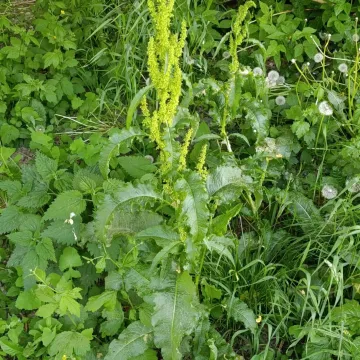
Botanically, Rumex longifolius is characterized by a deep taproot and a robust stem that can grow up to 1.2 meters. The leaves are large, lanceolate with wavy margins, providing significant harvestable surface area. Its reproductive success is attributed to its high seed production potential and strong vegetative regeneration capability.
Agronomic requirements include high-fertility soils, preferably loams with a neutral or slightly acidic pH. Effective cultivation involves maintaining consistent soil moisture, which prevents premature bolting. Farmers should focus on systematic weeding and nitrogen-rich fertilizing to maximize the yield of tender, flavorful leaves throughout the season.
- Exceptional frost hardiness during winter dormancy.
- Sensitivity to leaf-eating beetles, requiring integrated pest management.
- Importance of harvesting before flower stalks fully develop to maintain leaf quality.
The primary economic use of long-leaf dock is as a fresh vegetable crop for local markets. Beyond human consumption, it serves as a valuable forage plant for livestock, providing early-season vitamins. Its ease of propagation and low-input requirements make it an interesting candidate for sustainable small-scale farming systems.
Photo gallery