Broad-leaved dock
Rumex obtusifolius L.
Description
Broad-leaved dock (Rumex obtusifolius L.) is a perennial herbaceous plant belonging to the Polygonaceae family. In agricultural settings, it is primarily recognized as a persistent and troublesome weed that competes with grasses in permanent pastures, meadows, and agricultural fields. Its ability to thrive in various conditions makes it a significant challenge for land management and forage production.
The species originated in Eurasia but has since become naturalized globally, particularly in temperate regions of North and South America, Australia, and New Zealand. It typically colonizes fertile, nitrogen-rich soils, often proliferating in disturbed areas, damp lowlands, and around manure heaps. Its widespread distribution is supported by its adaptability to various soil types, ranging from clays to damp loams.
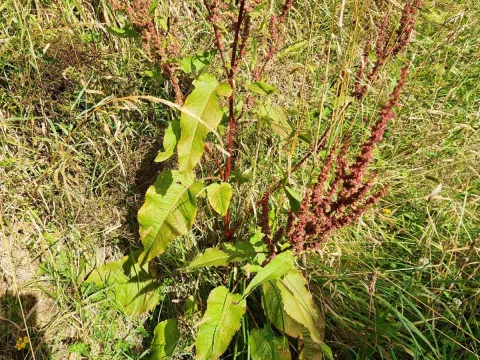
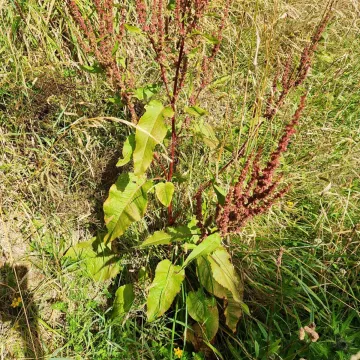
From a botanical perspective, the plant is characterized by its large, ovate basal leaves with heart-shaped bases and a sturdy, branching stem that can grow up to 1.5 meters tall. It produces a large, loose inflorescence bearing numerous seeds. These seeds are remarkably resilient, capable of remaining viable in the soil bank for decades, which allows the plant to reappear even after years of suppression.
Management and agronomic control of Rumex obtusifolius require an integrated approach. Standard methods involve physical removal by digging out the deep taproot or repeated deep cutting. Chemical control with selective herbicides is often necessary in heavy infestations. Proper soil nutrient management and maintaining a dense, healthy grass sward are crucial to prevent the germination of dock seeds and to limit their competitive advantage.
Economically, the presence of broad-leaved dock on farmland is detrimental as it reduces the biomass yield of palatable forage for livestock. Furthermore, the leaves contain oxalic acid, which can be toxic to grazing animals when consumed in high concentrations. While the plant has historical uses in herbal traditions, it is currently considered a target for eradication to maintain the quality and safety of commercial agricultural pastures.
- Strong taproot system providing longevity.
- Prolific seed production and dispersal.
- Resilience to grazing and mechanical cutting.
- Inhibits the growth of valuable forage species.
Photo gallery