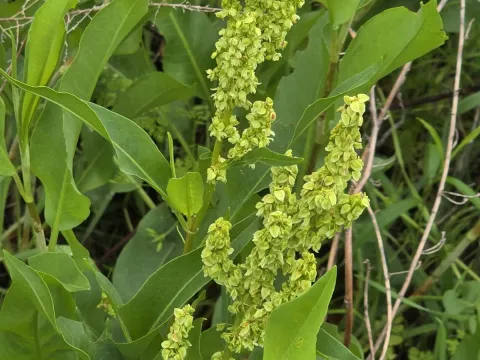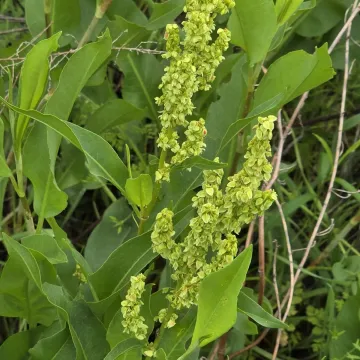

Pale dock
Rumex altissimus A. W. Wood
Description
Pale dock (scientific name: Rumex altissimus) is a perennial herbaceous plant belonging to the Polygonaceae family. In agricultural contexts, it is recognized for its robust growth habit and significant biomass production, making it a subject of interest for forage development and soil conservation programs.
Originating in North America, this species is native to the central and eastern United States. Due to its ecological resilience, it has successfully established itself in various environments across temperate zones. The plant is known for its ability to colonize diverse landscapes, ranging from open fields to riparian corridors, proving its extreme adaptive capacity.
Botanically, Rumex altissimus is characterized by tall, erect stems that can reach heights of up to 1.5 meters. The leaves are smooth, lance-shaped, and relatively thick, providing high nutritional value when harvested at the vegetative stage. Its deep, vigorous taproot system is an essential trait that contributes to its endurance against drought and soil compaction.
Cultivation of pale dock requires attention to soil fertility and moisture management. It thrives in well-drained, nutrient-rich loamy soils. When implemented in an agricultural rotation, the crop responds well to phosphorus and nitrogen applications, which enhance both the quality and quantity of the forage yield throughout the growing season.
- Excellent adaptation to varied soil types
- Deep root system aiding in soil moisture retention
- Rapid biomass regeneration after harvest
- High protein content suitable for livestock feed
In terms of agricultural use, the crop serves as a reliable source of early-season forage. Farmers managing this plant must remain vigilant against common pests such as dock leaf beetles and various rust pathogens. Effective management relies on regular field scouting and the implementation of cultural practices that favor rapid stand development over weed competition.
Photo gallery