Senegalia fleckii
Senegalia fleckii
Description
Senegalia fleckii is a perennial woody plant belonging to the Fabaceae family. Previously classified under the genus Acacia, it has been reclassified to the genus Senegalia based on modern taxonomic revisions. This plant is a significant component of the arid landscape in Southern Africa, well-adapted to surviving in resource-limited environments.
The native distribution range of this species covers regions of Namibia, Botswana, Zimbabwe, and South Africa. It typically thrives in savanna woodlands and on sandy substrates. As a resilient species, it plays a vital ecological role by providing habitat for wildlife and maintaining the stability of fragile ecosystems in hot, arid zones.
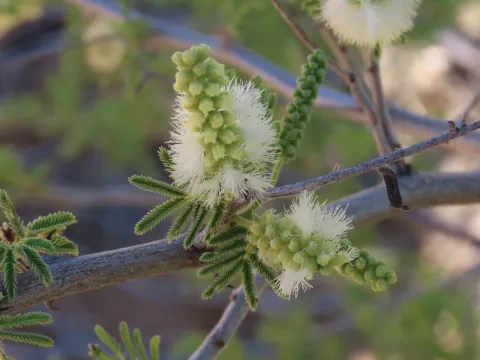
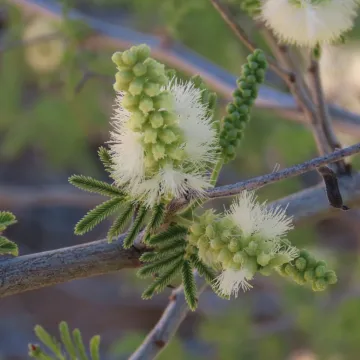
Botanically, it presents as a tree or large shrub, often reaching heights between 6 to 8 meters. It is characterized by gray bark, paired stipular spines, and compound, feathery leaves. The flowers are arranged in spikes, appearing creamy-white to pale yellow. This morphology allows the plant to minimize water loss and endure intense heat.
From an agricultural standpoint, Senegalia fleckii requires well-drained, sandy-loam soils. It is highly drought-tolerant, requiring minimal water once established. Propagation is typically achieved through seeds, which often require scarification to improve germination rates. Over-irrigation is detrimental, as the root system is prone to fungal rot in stagnant water.
The primary economic use of this plant is in agroforestry. It is frequently utilized as a windbreak and for soil erosion control. Furthermore, its foliage and seed pods are valued as a supplemental fodder source for livestock during the dry seasons when other forage is unavailable. The wood is dense and durable, making it useful for local construction needs.
- Exceptional tolerance to long-term droughts.
- Nitrogen-fixing capabilities, benefiting soil health.
- High nutritional value of leaves for livestock fodder.
- Resistance to various environmental stressors typical of savanna regions.
Photo gallery