Senegalia kraussiana
Senegalia kraussiana
Description
Senegalia kraussiana is a perennial woody climber or shrub belonging to the Fabaceae family, specifically within the Mimosoideae subfamily. Formerly categorized under the genus Acacia, this species is now recognized within the Senegalia genus, distinguishable by its specific stipular spines and inflorescence structures that set it apart from other leguminous flora.
The plant originates from Southern Africa, where it thrives in savannahs, woodland edges, and thickets. Its native range is characterized by warm temperatures and distinct seasonal rainfall, allowing the plant to adapt to various environmental conditions. Due to its climbing nature, it frequently utilizes other shrubs or trees as structural support, reaching for higher levels of canopy light.
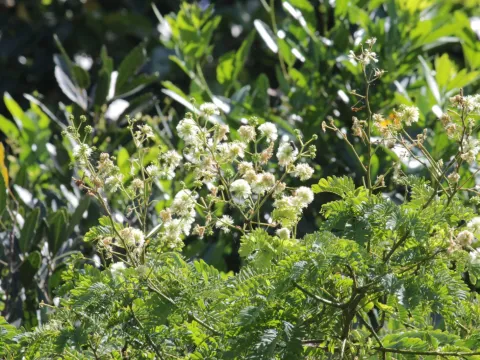
Botanically, it features bipinnate leaves and small, fragrant, globe-shaped flower heads that are typical for the tribe Acacieae. The presence of hook-like spines along its stems is an evolutionary adaptation that facilitates climbing and provides defense against herbivores. This architecture makes it a distinctive specimen in both its native habitat and controlled horticultural environments.
Regarding agrotechnical requirements, Senegalia kraussiana prefers well-drained sandy or loamy soils with a near-neutral pH. It exhibits high tolerance to heat and moderate drought conditions once established. However, for agricultural or ornamental purposes, regular pruning is necessary to maintain its shape and manage its growth, particularly in confined spaces where it may become invasive if left unmanaged.
The primary economic and agricultural uses include soil stabilization on slopes, the creation of robust living fences, and use as an ornamental feature in tropical gardens. Typical health issues involve root rot caused by waterlogged soil and infestations of sap-sucking insects like mealybugs or scale insects. Effective management involves maintaining a clean growing environment and proper spacing to ensure adequate airflow and sunlight penetration.
Photo gallery