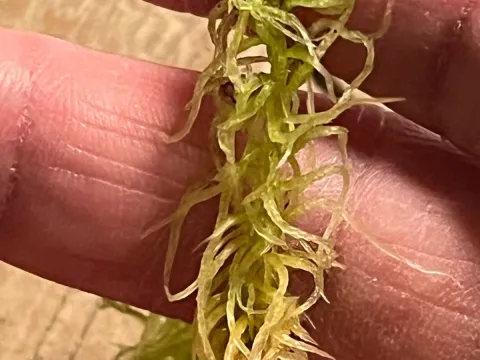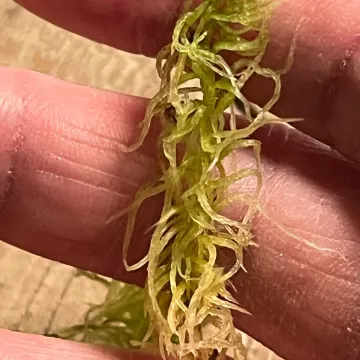
Fringed bogmoss
Sphagnum fimbriatum
Description
Fringed bogmoss (Sphagnum fimbriatum) is a species of perennial wetland moss belonging to the Sphagnaceae family. As a significant agricultural resource, this species is highly valued for its role in forming peatlands and its functional utility in modern plant production as a sterile, water-retentive growing medium.
The native range of this species extends throughout the temperate and arctic zones of the Northern Hemisphere, including vast territories in Eurasia and North America. In agricultural settings, it is cultivated in specialized wetland plots or controlled environments designed to replicate the humid, acidic conditions of its natural habitat.
Botanically, it appears as soft, pale green mats or loose carpets. Its distinct feature is the fimbriate (fringed) margin of the branch leaves, which helps in identifying the species. The plant lacks true roots, relying on its specialized cellular structure to absorb and store water, often holding up to twenty times its own dry weight.
The agrotechnics for growing this moss require meticulous management of water levels, ensuring the substrate remains saturated. It thrives in highly acidic conditions with a pH range of 3.0 to 4.5. The cultivation process is primarily vegetative, involving the distribution of moss fragments over a prepared, moist surface, which under proper humidity, rapidly regenerates into a new colony.
The primary economic use for this species is in the horticultural industry, where it serves as a premium potting component for orchids, carnivorous plants, and seed germination. Its natural antiseptic properties help protect young plants from soil-borne pathogens, while its moisture-retaining capacity ensures consistent hydration of root systems.
The management of moss fields often faces challenges related to moisture deficits and the encroachment of vascular plant species that can outcompete the moss. Pests such as certain insect larvae can disrupt growth, and improper temperature management during intense sun exposure may lead to the desiccation and subsequent decay of the moss clusters.
Photo gallery