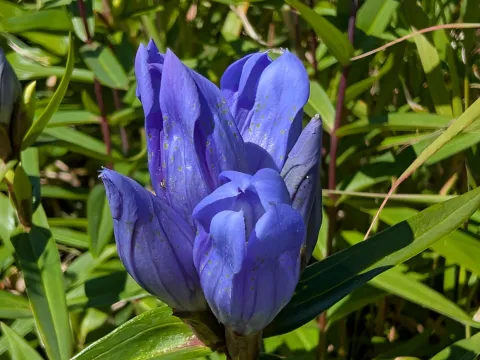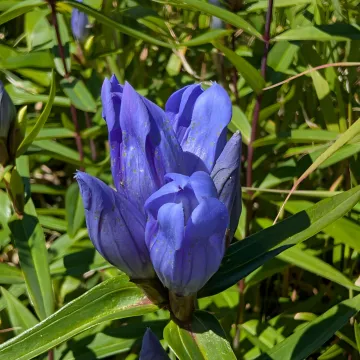
Three-flowered gentian
Gentiana triflora Pall.
Description
The Three-flowered gentian (Gentiana triflora Pall.) is a perennial herbaceous plant belonging to the Gentianaceae family. It is recognized globally both as an ornamental species and as a valuable botanical resource for the pharmaceutical industry due to the presence of specific bioactive compounds.
Native to the regions of Eastern Siberia, the Russian Far East, China, Korea, and Japan, this species naturally inhabits meadows, forest margins, and wet rocky slopes. Its adaptation to temperate environments makes it a suitable crop for cool-climate agriculture, provided that moisture levels are consistently managed.
Botanically, the plant is characterized by a strong, erect stem reaching heights of 60–80 cm. The deep blue or violet flowers, typically arranged in clusters of three, appear in the leaf axils. The plant features a robust root system, which serves as both an energy storage organ and the primary source of medicinal extracts used in traditional and modern medicine.
Agricultural requirements for successful cultivation center on maintaining moist, fertile, and well-drained soils with a slightly acidic pH. The plant thrives in areas with partial sun to light shade. Irrigation must be consistent, as the species is highly sensitive to moisture stress, particularly during the hot summer months, which can lead to stunted growth or poor flowering.
The primary utility of the plant is in pharmacological production, where roots are harvested for their bitter glycosides that stimulate digestion and have anti-inflammatory properties. In an agronomic context, management focuses on preventing root rot through careful soil drainage and monitoring for pests such as snails or aphids, which can damage the foliage during the early stages of development.
Photo gallery