Topel Holly
Ilex x attenuata Ashe
Description
Topel Holly (Ilex x attenuata 'Topel') is a sophisticated evergreen shrub belonging to the Aquifoliaceae family. This hybrid is highly prized in horticulture for its dense, conical growth habit and its spectacular display of bright red berries that persist throughout the winter months, providing year-round visual interest in the landscape.
Originating from the United States as a cross between Ilex opaca and Ilex cassine, this cultivar thrives in temperate climates. It is best adapted to regions with mild winters, where it can maintain its lush, glossy foliage without significant risk of cold damage. The plant performs best when situated in full sun to partial shade, which promotes dense branch development.
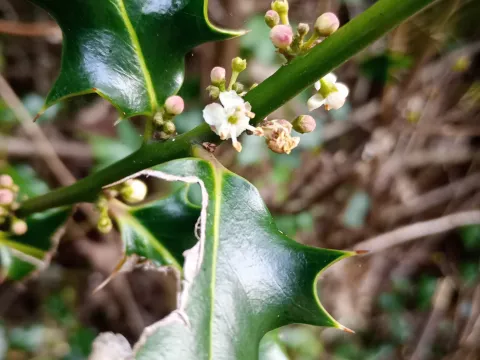
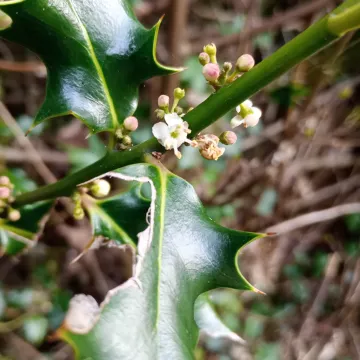
Botanically, the plant is characterized by its stiff, lance-shaped leaves with spiny margins and a deep, waxy green color. As a dioecious species, the Topel Holly requires both male and female plants to be present in the vicinity to ensure successful pollination and the subsequent production of its signature heavy berry crop, which is a major ornamental feature.
The agrotechnical requirements for this culture include planting in acidic, well-drained, and organic-rich soil. It is crucial to avoid waterlogged locations, as the roots are susceptible to rot. Regular irrigation is necessary during the establishment phase, though mature specimens exhibit moderate drought tolerance. Pruning should be performed in early spring to maintain the desired shape and density.
- Excellent choice for privacy screening and hedges.
- High aesthetic appeal during the winter dormant season.
- Requires acidic soil for optimal nutrient uptake.
- Provides food sources for local bird populations.
In terms of хозяйственного (utilitarian) use, Topel Holly is primarily grown as an ornamental plant in formal garden designs, foundation plantings, or as a windbreak. Regarding plant health, producers should monitor for common pests such as scale insects and spider mites, as well as fungal leaf spots. Maintaining good air circulation and appropriate fertilization schedules will minimize these risks.
Photo gallery