


SKU #2795
·
536 views
Hanni CS
Corn
CAUSSADE SEMENCESUser rating
1 vote100% positive reviews
No ratings yet — be the first.
FAO
90–1240
Hybrid Type
Three-line hybrid
Kernel Type
Flint-dent
Use Direction
Grain
About product

A reliable, French-bred three-line hybrid offering high disease resistance and stable grain performance.
FAO
90–1240
Hybrid Type
Three-line hybrid
Kernel Type
Flint-dent
Use Direction
Grain
Description
French breeding for reliable grain performance
The «Hanny KS» corn hybrid from Caussade Semences represents the best of the European breeding tradition, focusing on high efficiency and predictable yields. As a three-line hybrid, it offers excellent adaptability to variable growing conditions, making it a sought-after choice for farms that prioritize consistent grain production.
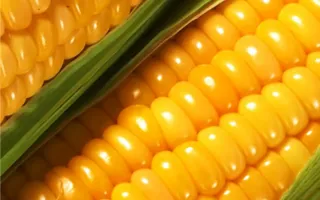
At the heart of this hybrid is its flint-dent grain type. This structure combines the best of both worlds: high germination energy and rapid moisture dry-down during maturation—critical factors in regions with short or wet seasons. With an FAO rating ranging from 90 to 1240, Hanny KS offers significant flexibility in regional cultivation, allowing agronomists to optimize sowing schedules according to local climate demands.
Crop health as the cornerstone of yield
One of the primary strengths of Hanny KS is its robust resistance to pathogens that threaten corn field potential every year. The hybrid displays a strong immune response against several key fungal diseases:
- Fusarium: The hybrid effectively mitigates the risk of this pathogen, protecting the integrity of the grain.
- Helminthosporiosis: Hanny KS effectively restricts the development of leaf spotting, maintaining photosynthetic efficiency until the end of the vegetation period.
- Common Smut: Built-in genetic resistance ensures a high-quality, market-ready harvest.
The recommended plant density is 75,000–80,000 plants per hectare. This density allows the crop to fully realize its yield potential by ensuring sufficient nutrient uptake and light interception for proper cob development. When grown according to recommended agronomic practices, this hybrid proves itself as a reliable, high-performance tool for modern grain production.
Crop & resistance
Crop
Disease resistance
Specifications hover over for a hint about the specification
|
FAO
FAO
Corn hybrids are classified by maturity groups and by the FAO number. All corn hybrids are distributed according to the FAO scale. Under Central European conditions, a difference of 10 FAO units between hybrids results in a 1-2 day difference in their maturity. The higher the FAO... |
90–1240 |
|---|---|
| Hybrid Type | |
|
Kernel Type
Kernel Type
Dent corn (Zea mays indentata) — Large, elongated, flat kernels. The endosperm is horny on the sides of the kernel, mealy in the center and at the top. A depression forms at the top of the kernel upon ripening. Dent corn is the most widely cultivated group among others. Plants ty... |
|
|
Use Direction
Use Direction
Dual-purpose hybrids: for silage and grain in all growing regions. These are "stay-green" type hybrids, meaning the plants remain green for a longer period. However, this does not affect the sugar, cellulose, and hemicellulose content, nor the degree of lignification of the plant... |
|
|
Recommended Density
Recommended Density
Optimal productivity is achieved at a planting density of 4000-5500 plants/ha. Possible planting scheme: 300-500x40-80 cm. |
75-80 thousand pcs/ha |
| Catalog | Catalog → Corn |
| Manufacturer | CAUSSADE SEMENCES |
| Originator | LLC 'LIDEA RUS' |
| Originator | CAUSSADE SEMENCES |
| Originator | Lidea France |
| Originator | CAUSSADE SAATEN| Caussade Saaten Vertrieb |
| Originator | Caussade Semence |
| Originator | Baratin Rene |
| Originator | Lidea France |
| Patent holder | Cussade Semences S A |
| Country | France |
Store offers
Prices are updated on loadLoading offers…
Aggregator catalog: prices are collected automatically from store websites, normalized by AI and converted at the current exchange rate. Before ordering, confirm the price and availability on the store's website. This block is not indexed by search engines — the data is loaded after the page opens.
Alternatives
Corn · similar varieties


See also
Often considered together with this variety


Recently viewed
Similar items in this catalog section






Comments · 0