



SKU #33900
·
18 views
NK Top
Corn
SyngentaUser rating
0 votes0% positive reviews
No ratings yet — be the first.
FAO
90–1240
Ripening
120-140 days
Hybrid Type
Simple Hybrid
Kernel Type
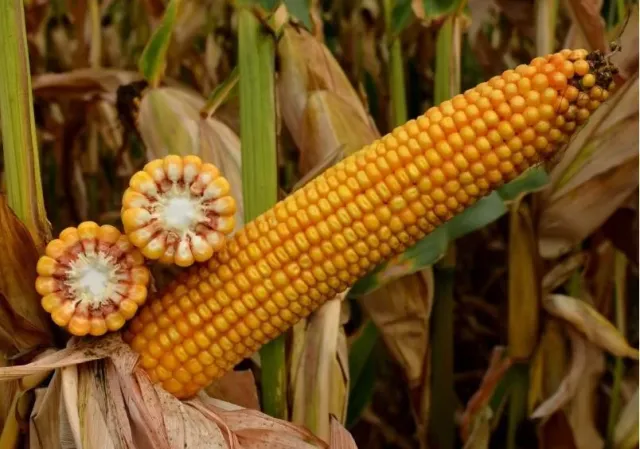
Flint-dent
About product

A versatile, high-yielding hybrid with robust disease resistance, engineered for both high-quality grain and nutritious silage production.
FAO
90–1240
Ripening
120-140 days
Hybrid Type
Simple Hybrid
Kernel Type
Flint-dent
Description
Technical Profile and Yield Potential of NK Top
The NK Top hybrid from Syngenta is a reliable choice for producers aiming for consistency in both grain production and high-quality silage. The key technical driver behind its performance is the flint-dent kernel type, which offers an optimal balance between rapid dry-down at harvest and high-density starch accumulation.
Disease Resistance and Phytosanitary Integrity
Protecting yield potential against fungal pathogens is paramount for grain quality. NK Top is genetically optimized to withstand high-pressure environments, specifically regarding:
- Fusarium Ear Rot: Enhanced resistance prevents the development of mycotoxins, ensuring the grain remains safe and marketable.
- Common Smut: The hybrid features robust defense mechanisms that maintain ear health, protecting yield integrity even under challenging seasonal conditions.
Agronomic Planning and Seeding Recommendations
With a maturity period ranging from 120 to 140 days, NK Top offers flexibility in varying management systems. The recommended planting density is tailored to the final crop usage:
- For grain production: 60,000–65,000 plants/ha, allowing for maximum ear development and optimal kernel filling.
- For silage production: 80,000–85,000 plants/ha, promoting higher vegetative biomass while maintaining nutritional feed quality.
As a single-cross hybrid, NK Top provides excellent stand uniformity, which facilitates efficient harvesting and consistent drying. Originating from Syngenta’s Grangemouth facility in the UK, the seeds possess high germination energy, ensuring strong emergence and uniform crop establishment across diverse field conditions.
Crop & resistance
Disease resistance
Specifications hover over for a hint about the specification
|
FAO
FAO
Corn hybrids are classified by maturity groups and by the FAO number. All corn hybrids are distributed according to the FAO scale. Under Central European conditions, a difference of 10 FAO units between hybrids results in a 1-2 day difference in their maturity. The higher the FAO... |
90–1240 |
|---|---|
| Ripening | 120-140 days |
| Hybrid Type | |
|
Kernel Type
Kernel Type
Dent corn (Zea mays indentata) — Large, elongated, flat kernels. The endosperm is horny on the sides of the kernel, mealy in the center and at the top. A depression forms at the top of the kernel upon ripening. Dent corn is the most widely cultivated group among others. Plants ty... |
|
|
Use Direction
Use Direction
Dual-purpose hybrids: for silage and grain in all growing regions. These are "stay-green" type hybrids, meaning the plants remain green for a longer period. However, this does not affect the sugar, cellulose, and hemicellulose content, nor the degree of lignification of the plant... |
|
|
Recommended Density
Recommended Density
Optimal productivity is achieved at a planting density of 4000-5500 plants/ha. Possible planting scheme: 300-500x40-80 cm. |
60-65 thousand pcs/ha, 80-85 thousand pcs/ha |
| Catalog | Catalog → Corn |
| Manufacturer | Syngenta |
| Originator | Syngenta |
| Originator | Сингента Грангемус Воркс, Грангемус, Великобританія |
| Originator | A |
| Originator | n |
| Originator | GSN Semences |
| Originator | Syngenta Seeds |
| Country | Switzerland |
Store offers · 1 from 1 stores
Prices are updated on loadLoading offers…
Aggregator catalog: prices are collected automatically from store websites, normalized by AI and converted at the current exchange rate. Before ordering, confirm the price and availability on the store's website. This block is not indexed by search engines — the data is loaded after the page opens.
See also
Often considered together with this variety


Recently viewed
Similar items in this catalog section






Comments · 0