


SKU #352
·
8 266 views
Mast^er 62 WG
Herbicides, Desiccants
Schirm GmbHUser rating
2 votes50% positive reviews
No ratings yet — be the first.
Last Processing Date, Days
1
By application method
Foliar herbicide, Soil herbicide
By Mode of Action
Selective herbicide
By Application Timing
Post-emergence herbicide
About product

A powerful post-emergence herbicide for robust control of grass and broad-leaved weeds in corn.
Last Processing Date, Days
1
By application method
Foliar herbicide, Soil herbicide
By Mode of Action
Selective herbicide
By Application Timing
Post-emergence herbicide
Description
Mastering Corn Protection: Why MaizeTer 62 WG Leads the Field
When perennial weeds like couch grass or creeping thistle take hold of a corn field, standard solutions often fall short. MaizeTer 62 WG, developed by Bayer AG, serves as a high-performance solution for agronomists who demand absolute control. By combining foramsulfuron and iodosulfuron-methyl-sodium with the safener isoxadifen-ethyl, this herbicide offers a sophisticated defense strategy against tough competitors.
The hallmark of MaizeTer 62 WG is its unique balance of power and safety. Many herbicides control weeds but leave the crop stunted; MaizeTer 62 WG uses its built-in safener to ensure the corn crop continues to thrive without undergoing significant stress. This makes it an ideal choice for high-yield operations where every leaf stage counts.
Key Advantages:
- Broad-Spectrum Control: It targets a wide variety of annual and perennial dicot and grass weeds, including difficult species like green foxtail and lamb's quarters.
- Systemic Action: The product travels within the plant, ensuring that the weed is eradicated from the roots to the growing points.
- Advanced Formulation: As a water-dispersible granule, it is easy to mix, requires no special handling, and ensures uniform distribution within the spray solution.
As a post-emergence herbicide, MaizeTer 62 WG is best applied when the corn crop is in the 2-6 leaf stage. Because it is highly selective and systemic, it acts specifically where needed. Users should note that it is designed for a single-application program, which fits well into intensive agronomic management plans. With its 3rd class hazard rating, it is a professional-grade product that requires standard care and attention during application.
For large-scale farmers, MaizeTer 62 WG is more than just a chemical tool—it is an investment in field uniformity and potential yield. By eliminating weed competition early, it ensures that the crop secures all the available nutrients and moisture, directly supporting the bottom line.
Composition
Active ingredients
- Foramsulfuron гербицид Производные сульфонилмочевины
- Iodosulfuron-methyl-sodium гербицид Производные сульфонилмочевины
- Iodosulfuron-methyl-sodium
- Isoxadifen-ethyl гербицид
Application
Used on crops
Specifications hover over for a hint about the specification
|
Last Processing Date, Days
Last Processing Date, Days
Number of days from processing to harvest cleanup |
1 |
|---|---|
|
By application method
By application method
Based on the method of application, herbicides are divided into foliar, soil, and root herbicides. Foliar herbicides are applied to vegetative plants and act through their above-ground organs. The main method of application for such preparations is spraying using sprayers or airp... |
|
|
By Mode of Action
By Mode of Action
Herbicides are divided into two groups according to their mode of action: Non-selective herbicides — intended for the destruction of all plant species. They are applied in agricultural fields during the absence of the main crop (after harvest, before crop emergence, on fallow lan... |
|
|
By Application Timing
By Application Timing
Herbicides are classified according to application timing into pre-emergent and post-emergent herbicides. Pre-emergent herbicides are mostly soil-applied or granular formulations applied before the emergence of crop plants. They are applied either pre-sowing (during pre-sowing cu... |
|
| Form of the preparation | |
|
Drug Consumption
Drug Consumption
Mass of the preparation per unit of treated area. It is customary to express the dosage rate in kilograms per hectare. The dosage rate is most often given in terms of 100% active ingredient, although sometimes it is calculated based on the preparation in the form of application w... |
Up to 0.5 L/ha |
| Danger Class | 3 |
|
By type of action
By type of action
Depending on their ability to move through living tissues, herbicides are divided into contact and systemic. Contact herbicides cause local damage to plant tissue upon contact, which dies or gradually degrades. This action does not always completely destroy the plant; often, its... |
|
|
Maximum number of treatments
Maximum number of treatments
Maximum recommended number of treatments per vegetation period. |
1 |
| Catalog | Catalog → Herbicides, Desiccants |
| Manufacturer | Schirm GmbH |
| Manufacturer | BAYER |
| Manufacturer | Imperial Chemical Logistics |
| Manufacturer | Exwold Technologies Ltd |
| Applicant | Байєр АГ, Німеччина |
| Country | Germany |
Store offers · 7 from 7 stores
Prices are updated on loadLoading offers…
Aggregator catalog: prices are collected automatically from store websites, normalized by AI and converted at the current exchange rate. Before ordering, confirm the price and availability on the store's website. This block is not indexed by search engines — the data is loaded after the page opens.
Alternatives
Corn · similar varieties




See also
Often considered together with this variety




Recently viewed
Similar items in this catalog section


Stomp 330
БАСФ Агро БВ, Швейцарія, на заводі , Франція,Італія (Сієна)
From your browsing history
710.8K 14 offers
13.2 €за 1 л ≈ 674 ₴


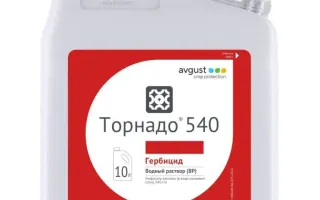
Tornado
ЗАТ Фірма Август, Росія.,селище Вурнари,
From your browsing history
57.8K 8 offers
0.8 €за 1 л ≈ 41 ₴


Comments · 0