KN
29 July 2013
Оптовая цена от производителя на Раундап 8$ за литр, что там могут продавать за 4 непонятно и в розницу.

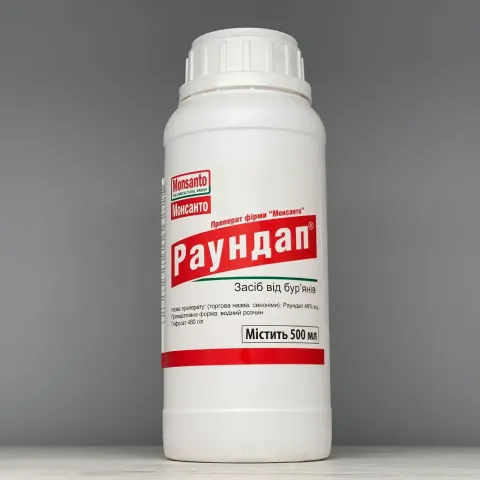
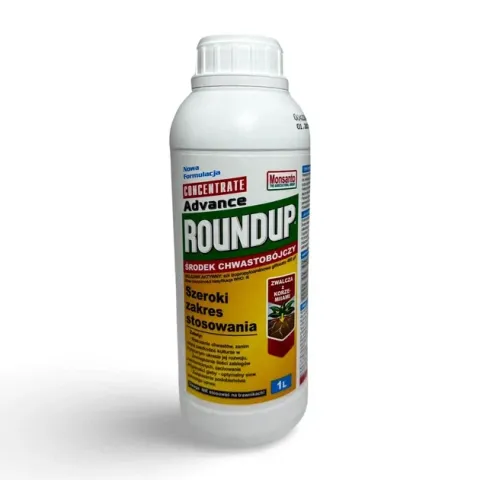


Herbicides, Desiccants
MONSANTO
A benchmark systemic, non-selective herbicide for total weed control in orchards and field crops.
In the global agrochemical market, "Roundup" from the American corporation Monsanto has long become a household name. It is the gold-standard systemic, non-selective herbicide that has defined weed control standards in intensive agriculture for decades. Developed based on the isopropylamine salt of glyphosate, this product revolutionized the industry by allowing farmers to clear fields of the most persistent perennial weeds, such as couch grass and creeping thistle, either pre-seeding or during the growing season.
As a non-selective post-emergence herbicide, Roundup penetrates the leaf surface and is translocated throughout the entire plant, including the root system. This ensures complete eradication of weeds, including annual grasses and broadleaf species like common lambsquarters and green foxtail. The product demonstrates high efficacy in orchards (apple, cherry, plum, peach) and on industrial crops such as oilseed rape, soybean, flax, and fodder beet.
With a short pre-harvest/re-entry interval of just 1 day, it remains an indispensable tool for operations with tight agronomic windows. However, because it is a non-selective herbicide, Roundup requires careful application techniques to prevent drift onto non-target crops.
|
Last Processing Date, Days
Last Processing Date, Days
Number of days from processing to harvest cleanup |
1 |
|---|---|
|
By type of action
By type of action
Depending on their ability to move through living tissues, herbicides are divided into contact and systemic. Contact herbicides cause local damage to plant tissue upon contact, which dies or gradually degrades. This action does not always completely destroy the plant; often, its... |
|
|
By Mode of Action
By Mode of Action
Herbicides are divided into two groups according to their mode of action: Non-selective herbicides — intended for the destruction of all plant species. They are applied in agricultural fields during the absence of the main crop (after harvest, before crop emergence, on fallow lan... |
|
|
By Application Timing
By Application Timing
Herbicides are classified according to application timing into pre-emergent and post-emergent herbicides. Pre-emergent herbicides are mostly soil-applied or granular formulations applied before the emergence of crop plants. They are applied either pre-sowing (during pre-sowing cu... |
|
|
By application method
By application method
Based on the method of application, herbicides are divided into foliar, soil, and root herbicides. Foliar herbicides are applied to vegetative plants and act through their above-ground organs. The main method of application for such preparations is spraying using sprayers or airp... |
|
| Form of the preparation | |
|
Drug Consumption
Drug Consumption
Mass of the preparation per unit of treated area. It is customary to express the dosage rate in kilograms per hectare. The dosage rate is most often given in terms of 100% active ingredient, although sometimes it is calculated based on the preparation in the form of application w... |
More than 3.0 L/ha, From 2.0 - 3.0 L/ha |
|
Desiccant
Desiccant
Desiccants (from Latin desicco — dry; desiccans (desiccantis) — drying) are chemical substances used in agriculture for desiccating plants at the root. They can be conditionally classified as herbicides, as they irreversibly affect plants by causing tissue dehydration, ultimately... |
|
| Catalog | Catalog → Herbicides, Desiccants |
| Manufacturer | MONSANTO |
| Country | USA |
Aggregator catalog: prices are collected automatically from store websites, normalized by AI and converted at the current exchange rate. Before ordering, confirm the price and availability on the store's website. This block is not indexed by search engines — the data is loaded after the page opens.
Fodder beet · similar varieties
Often considered together with this variety
Similar items in this catalog section







Comments · 3