


SKU #25900
·
41 views
Alpha-Amidin r.p.
Insecticides, Acaricides
Ф.Меатон Лімітед, Лондон, Великобританія.User rating
0 votes0% positive reviews
No ratings yet — be the first.
Form of the preparation
Water-soluble powder
Danger Class
3
Type of Action
Systemic fungicide
Method of Application
Spraying by vegetation
About product

Systemic insecticide based on acetamiprid for reliable protection of rapeseed against beetles and flea beetles.
Form of the preparation
Water-soluble powder
Danger Class
3
Type of Action
Systemic fungicide
Method of Application
Spraying by vegetation
Description
Systemic Protection for Rapeseed: How Alpha-Amiprid W.P. Works
The effectiveness of controlling pollen beetles and cruciferous flea beetles directly depends on the product's ability to penetrate plant tissues. Alpha-Amiprid W.P., produced by F.Meaton Limited (London, UK), is based on acetamiprid—an active ingredient from the neonicotinoid class. Unlike contact insecticides, this product features systemic action: after foliar application, it is rapidly absorbed by leaves and distributed throughout the entire plant structure.
Technical Advantages of the Formulation
- Translaminar Activity: Acetamiprid penetrates the leaf cuticle, providing protection even to areas of the plant that were not directly hit by the spray solution.
- Pest Paralysis: The substance acts on the nicotinic acetylcholine receptors of the insect's nervous system. This causes hyperactivity, leading to tremors and eventual death.
- Stability of Formulation: The water-soluble powder (W.P.) ensures easy preparation of a homogeneous tank mixture that does not clog nozzles and provides uniform coverage of the leaf surface.
Practical Application Insights
To achieve maximum protective effect on winter rapeseed, it is recommended to follow the application rate of 0.1–0.15 kg/ha. The systemic nature of Alpha-Amiprid W.P. allows for effective control of hidden pests that damage buds and growing points. The product maintains its efficacy across a wide temperature range, which is critical during spring insect migration. Given its Class 3 toxicity rating and a 30-day pre-harvest interval, applications should be planned according to the crop's development stages, with a maximum of 1-2 treatments per season.
Composition
Active ingredients
- Acetamiprid инсектицид Неоникотиноиды
Application
Used on crops
Against pests
Specifications hover over for a hint about the specification
| Form of the preparation | |
|---|---|
| Danger Class | 3 |
|
Type of Action
Type of Action
Insecticides are divided into contact, systemic, stomach, and fumigants based on their mode of entry into the organism. Contact insecticides affect insects upon contact with any part of their body, penetrating into their organism through the integument. They are used against pest... |
|
|
Method of Application
Method of Application
Seed treatment — treatment of seeds before sowing. Soil treatment — application of pesticides to soil, for example, in greenhouses. Seed treatment — a preparation used for pre-sowing treatment of seeds of various crops to protect seedlings from plant diseases and pests. In some c... |
|
|
Drug Consumption
Drug Consumption
Mass of the preparation per unit of treated area. It is customary to express the dosage rate in kilograms per hectare. The dosage rate is most often given in terms of 100% active ingredient, although sometimes it is calculated based on the preparation in the form of application w... |
0.1-0.15 |
|
Maximum number of treatments
Maximum number of treatments
Maximum recommended number of treatments per vegetation period. |
1-2 |
|
Last Processing Date, Days
Last Processing Date, Days
Number of days from processing to harvest cleanup |
30 |
| Catalog | Catalog → Insecticides, Acaricides |
| Manufacturer | Ф.Меатон Лімітед, Лондон, Великобританія. |
| Applicant | F. YUNISITY ENTERPRISES LTD., United Kingdom |
Store offers · 1 from 1 stores
Prices are updated on loadLoading offers…
Aggregator catalog: prices are collected automatically from store websites, normalized by AI and converted at the current exchange rate. Before ordering, confirm the price and availability on the store's website. This block is not indexed by search engines — the data is loaded after the page opens.
Alternatives
Winter rapeseed · similar varieties




See also
Often considered together with this variety


Recently viewed
Similar items in this catalog section


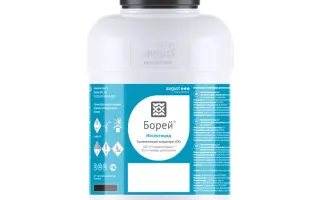
Borey
ЗАТ Фірма Август, Росія.,селище Вурнари,
From your browsing history
27.5K 9 offers
17.6 €за 1 л ≈ 899 ₴


Tabu
ZAT «August-Bel», Republic of Belarus
From your browsing history
45.8K 4 offers
9.8 €за 1 л ≈ 500 ₴


Comments · 0