


SKU #25773
·
41 views
Bisectrisa
Insecticides, Acaricides
Ф.Женьянг Джонгнонг Інд.,Ко,Лтд., Женьянг, Китай.User rating
0 votes0% positive reviews
No ratings yet — be the first.
Danger Class
3
Form of the preparation
Emulsion concentrate
Type of Action
Contact fungicide
Method of Application
Spraying of crops
About product

Reliable organophosphate insecticide for rapid control of aphids, thrips, and cereal pests.
Danger Class
3
Form of the preparation
Emulsion concentrate
Type of Action
Contact fungicide
Method of Application
Spraying of crops
Description
Efficient Pest Control for Cereals
When grain crops like winter wheat or barley face an infestation of cereal leaf beetles, Hessian flies, or thrips, the speed of response determines the success of the harvest. "Bisectrisa" (Bisektrisa), powered by pirimiphos-methyl, is designed as a powerful contact insecticide for fast-acting control in commercial farming.
Practical Scenarios for Farmers
Agronomists integrate this product into their plant protection strategies for its reliable "knockdown" effect:
- Eliminating Cereal Leaf Beetles and Cereal Flies: The organophosphate active ingredient ensures rapid impact on insects during critical vegetation stages, preventing yield losses from defoliation.
- Targeting Hidden Pests: With its contact action, it is highly effective against aphids and thrips that colonize leaf sheaths and ears, making it an essential tool for maintaining plant health.
- Field Application: Suitable for both winter and spring wheat and barley, the formulation provides consistent results across diverse climate zones.
Technical Application Tips
Produced by F.Zhenjiang Zhongnong Ind. Co., Ltd. (China), this product arrives as an emulsifiable concentrate, allowing for easy tank mixing. The recommended application rate is 0.5–1.5 L/ha, adjusted based on the pest pressure in the field. Adhering to the safety guidelines (Hazard Class 3), the product is restricted to a maximum of two applications per season. The pre-harvest interval of 20–30 days allows for careful scheduling of harvest logistics. By using Bisectrisa, farms gain a robust, cost-effective solution to manage pest populations and protect the yield potential of their grain crops.
Composition
Active ingredients
- Pirimiphos-methyl инсектицид Фосфорорганические
Application
Used on crops
Specifications hover over for a hint about the specification
| Danger Class | 3 |
|---|---|
| Form of the preparation | |
|
Type of Action
Type of Action
Insecticides are divided into contact, systemic, stomach, and fumigants based on their mode of entry into the organism. Contact insecticides affect insects upon contact with any part of their body, penetrating into their organism through the integument. They are used against pest... |
|
|
Method of Application
Method of Application
Seed treatment — treatment of seeds before sowing. Soil treatment — application of pesticides to soil, for example, in greenhouses. Seed treatment — a preparation used for pre-sowing treatment of seeds of various crops to protect seedlings from plant diseases and pests. In some c... |
|
|
Drug Consumption
Drug Consumption
Mass of the preparation per unit of treated area. It is customary to express the dosage rate in kilograms per hectare. The dosage rate is most often given in terms of 100% active ingredient, although sometimes it is calculated based on the preparation in the form of application w... |
0.5-1.5 |
|
Maximum number of treatments
Maximum number of treatments
Maximum recommended number of treatments per vegetation period. |
2 |
|
Last Processing Date, Days
Last Processing Date, Days
Number of days from processing to harvest cleanup |
20-30 |
| Catalog | Catalog → Insecticides, Acaricides |
| Manufacturer | Ф.Женьянг Джонгнонг Інд.,Ко,Лтд., Женьянг, Китай. |
| Applicant | Виробниче підприємство Агро-Союз, Україна; Ф. Іпрохем Компанії Лтд, Китай |
| Country | China |
Store offers
Prices are updated on loadLoading offers…
Aggregator catalog: prices are collected automatically from store websites, normalized by AI and converted at the current exchange rate. Before ordering, confirm the price and availability on the store's website. This block is not indexed by search engines — the data is loaded after the page opens.
Alternatives
Winter barley · similar varieties




See also
Often considered together with this variety


Recently viewed
Similar items in this catalog section


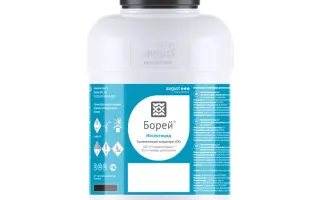
Borey
ЗАТ Фірма Август, Росія.,селище Вурнари,
From your browsing history
27.5K 9 offers
17.6 €за 1 л ≈ 899 ₴


Tabu
ZAT «August-Bel», Republic of Belarus
From your browsing history
45.8K 4 offers
9.8 €за 1 л ≈ 500 ₴


Comments · 0