

SKU #881
·
717 views
Overkill
Insecticides, Acaricides
Euroconsult, NVFUser rating
2 votes100% positive reviews
No ratings yet — be the first.
Method of Application
Spraying by vegetation
Form of the preparation
Emulsion concentrate
Drug Consumption
From 0.5 - 1.0 L/ha
Maximum number of treatments
2
About product
A powerful dual-action insecticide for reliable pest control in cereals and corn.
Method of Application
Spraying by vegetation
Form of the preparation
Emulsion concentrate
Drug Consumption
From 0.5 - 1.0 L/ha
Maximum number of treatments
2
Description
Protecting Cereals and Corn Against Pests
In intensive crop management, the timely control of pests is the difference between a high yield and a failed harvest. The "Overkill" insecticide, produced by NVF "Euroconsult," provides a robust defense system for cereal crops and corn. By combining organophosphates (chlorpyrifos) with pyrethroids (cypermethrin), this formulation addresses the threat from both internal and external insects, ensuring total crop coverage.
Strategic Advantages in Field Operations
- Knockdown Power: The inclusion of cypermethrin guarantees immediate mortality for pests like aphids and beetles upon contact.
- Fumigation Effect: The chlorpyrifos component ensures that even hidden pests—common in wheat spikes or dense corn canopies—are reached through vapor activity.
- Versatility: Effective against a broad spectrum, including the cereal leaf beetle, bread beetle, thrips, and leafhoppers, reducing the need for multiple specialized chemicals.
Operational Guidance for Farmers
"Overkill" is supplied as an emulsifiable concentrate, ensuring high stability in tank mixes. The recommended application rate is 0.5 – 1.0 L/ha, depending on pest pressure. For best field results, agronomists advise applying the treatment during the early morning or late evening when temperatures remain below 25°C, ensuring optimal droplet retention on plant foliage.
Adherence to the 30-day pre-harvest interval (PHI) is essential to meet grain quality standards. With a maximum of two applications allowed per season, growers have the flexibility to tackle secondary pest outbreaks without exceeding safety limits. As a Class 3 hazard product, standard safety equipment is sufficient for field teams to operate confidently during the spraying window.
Composition
Active ingredients
- Chlorpyrifos инсектицид Фосфорорганические
- Cypermethrin инсектицид Пиретроид
- Dicamba гербицид Производные бензойной кислоты
Application
Used on crops
Against pests
Specifications hover over for a hint about the specification
|
Method of Application
Method of Application
Seed treatment — treatment of seeds before sowing. Soil treatment — application of pesticides to soil, for example, in greenhouses. Seed treatment — a preparation used for pre-sowing treatment of seeds of various crops to protect seedlings from plant diseases and pests. In some c... |
|
|---|---|
| Form of the preparation | |
|
Drug Consumption
Drug Consumption
Mass of the preparation per unit of treated area. It is customary to express the dosage rate in kilograms per hectare. The dosage rate is most often given in terms of 100% active ingredient, although sometimes it is calculated based on the preparation in the form of application w... |
From 0.5 - 1.0 L/ha |
|
Maximum number of treatments
Maximum number of treatments
Maximum recommended number of treatments per vegetation period. |
2 |
|
Last Processing Date, Days
Last Processing Date, Days
Number of days from processing to harvest cleanup |
30 |
|
Type of Action
Type of Action
Insecticides are divided into contact, systemic, stomach, and fumigants based on their mode of entry into the organism. Contact insecticides affect insects upon contact with any part of their body, penetrating into their organism through the integument. They are used against pest... |
|
| Danger Class | 3 |
| Catalog | Catalog → Insecticides, Acaricides |
| Manufacturer | Euroconsult, NVF |
| Country | Ukraine |
Store offers
Prices are updated on loadLoading offers…
Aggregator catalog: prices are collected automatically from store websites, normalized by AI and converted at the current exchange rate. Before ordering, confirm the price and availability on the store's website. This block is not indexed by search engines — the data is loaded after the page opens.
Alternatives
Winter barley · similar varieties


See also
Often considered together with this variety


Recently viewed
Similar items in this catalog section

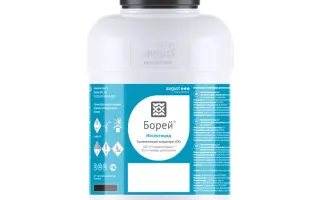
Borey
ЗАТ Фірма Август, Росія.,селище Вурнари,
From your browsing history
27.5K 9 offers
17.6 €за 1 л ≈ 899 ₴


Tabu
ZAT «August-Bel», Republic of Belarus
From your browsing history
45.8K 4 offers
9.8 €за 1 л ≈ 500 ₴



Comments · 0