


SKU #2419
·
1 706 views
CAPRICORN F1
Onion
SAKATAUser rating
0 votes0% positive reviews
No ratings yet — be the first.
Type
Onion
By day length
Medium Day Length
Direction
Recycling
Maturation Period
100 - 110 days
Prices in stores
from42.5 €per 1000 pcs
13 offers from 7 stores
About product

A reliable hybrid designed for mechanical harvesting, featuring strong resistance to Fusarium and excellent processing characteristics.
Type
Onion
By day length
Medium Day Length
Direction
Recycling
Maturation Period
100 - 110 days
Description
Technological potential of the "Capricorn F1" hybrid
The Japanese breeding school Sakata focused on balancing intensive growth and industrial processing suitability when developing "Capricorn F1". This medium-day onion demonstrates exceptional stability in field conditions where planting density and harvesting efficiency are the primary drivers of profitability.
Biological markers and disease resistance
The core engineering achievement of "Capricorn F1" is its built-in genetic resistance to Fusarium wilt. For producers, this translates to minimal yield losses during the 100–110 day growing period, when the root system is most susceptible to soil pathogens. Adaptation to medium-day photoperiods allows for successful cultivation across various latitudes without the risk of premature bolting.
Agronomic and industrial parameters
The morphology of the "Capricorn F1" bulb is optimized for mechanical harvesting requirements:
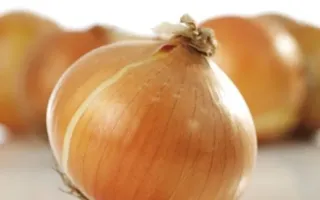
- Shape: Rounded geometry significantly reduces mechanical damage during combine operation.
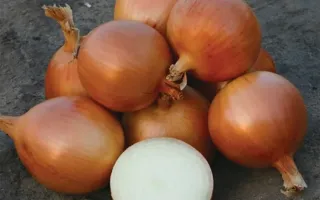
- Tunics: The light-brown outer scales have sufficient density to preserve market quality during long-distance shipping and storage.
- Internal structure: The white, firm flesh is highly sought after for processing, offering the necessary consistency for industrial products.
The recommended plant density is 1000–1100 thousand plants per hectare. Maintaining this density is critical for achieving a uniform market-ready caliber, which is essential for efficiency in processing and packaging lines.
Video · 3 videos
Suggest a video →Crop & resistance
Crop
Disease resistance
Specifications hover over for a hint about the specification
|
Type
Type
Galia (Galia) type — relatively new, of Israeli origin, although there are indications that this variety may originate from Spain. The fruits of this type are round or oval, weighing about 1 kg. The surface is smooth, covered with a delicate, connected netting, turning yellow whe... |
|
|---|---|
|
By day length
By day length
Onion is very sensitive to day length, so it is very important not to delay sowing and to cultivate varieties and hybrids appropriate for the day length, previously tested in this zone. Growing hybrids not intended for this zone can significantly affect yield, possibly causing pr... |
|
|
Direction
Direction
Existing varieties and types of cabbage are grown for fresh consumption, long-term storage, and technical processing. |
|
|
Maturation Period
Maturation Period
Vegetation period from emergence to technical maturity 30-50 days. |
100 - 110 days |
|
Harvest Method
Harvest Method
Most existing onion varieties are harvested manually. This is because onion bulbs are very sensitive to mechanical damage. However, there are varieties whose bulbs have a hard consistency and are suitable for mechanical harvesting. |
|
|
Onion bulb; color
Onion bulb; color
Distinguish two main colors of the onion bulb in cross-section. Specifically, white (possibly greenish-white) and red (pink) color. |
|
| Onion bulb; skin color | |
|
Cormus; shape
Cormus; shape
The shape of corms is quite diverse and can be flattened, round, and elongated. |
|
|
Recommended Density
Recommended Density
Optimal productivity is achieved at a planting density of 4000-5500 plants/ha. Possible planting scheme: 300-500x40-80 cm. |
1000 - 1100 thousand pcs/ha |
| Catalog | Catalog → Onion |
| Manufacturer | SAKATA |
| Country | Japan |
Store offers · 13 from 7 stores
Prices are updated on loadLoading offers…
Aggregator catalog: prices are collected automatically from store websites, normalized by AI and converted at the current exchange rate. Before ordering, confirm the price and availability on the store's website. This block is not indexed by search engines — the data is loaded after the page opens.
Alternatives
Onion · similar varieties




See also
Often considered together with this variety





Recently viewed
Similar items in this catalog section


Comments · 0