


SKU #2416
·
517 views
WESTERN GIANT F1
Onion
SAKATAUser rating
0 votes0% positive reviews
No ratings yet — be the first.
Type
Onion
By day length
Medium Day Length
Direction
Salad
Maturation Period
90 - 100 days
About product

A reliable salad onion with high resistance to Fusarium and stable yields.
Type
Onion
By day length
Medium Day Length
Direction
Salad
Maturation Period
90 - 100 days
Description
Why Western Giant F1 became a staple in vegetable growing
When you enter an onion field, it's crucial to understand what you'll be dealing with for the next 90–100 days. With the "Western Giant F1," Sakata's Japanese breeding has focused on predictability. This is a classic salad onion with medium day length that forgives many agronomic mistakes. The biggest advantage for me as a farmer is its resistance to Fusarium. In high humidity conditions or in fields where the soil is already 'tired,' this hybrid doesn't turn into a liability.
Field performance
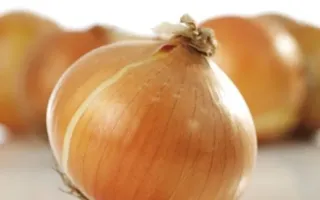
It is technologically easy to manage: at a recommended density of 1,000–1,100 thousand plants/ha, you get excellent marketable bulbs. The round shape simplifies mechanized harvesting; the bulbs are uniform and don't 'bounce' on the conveyor. The bronze scales are tight and hold well, which is critical for appearance during storage and transport. The white, juicy flesh inside is exactly what the end consumer values in salads.
- Maturity: 90 to 100 days. This allows for planning the harvest schedule without rushing.
- Immunity: significantly fewer losses due to Fusarium compared to local varieties.
- Planting: stick to the rate of 1.0–1.1 million plants/ha—this way, the bulb reaches its ideal size without the extra cost of thinning.
If you are looking for a hybrid for stable salad production with minimal risks of disease-related losses, this onion pays for itself 100%. It doesn't require any specific 'fiddling' during maintenance, and the yield of marketable produce is always predictable.
Crop & resistance
Crop
Specifications hover over for a hint about the specification
|
Type
Type
Galia (Galia) type — relatively new, of Israeli origin, although there are indications that this variety may originate from Spain. The fruits of this type are round or oval, weighing about 1 kg. The surface is smooth, covered with a delicate, connected netting, turning yellow whe... |
|
|---|---|
|
By day length
By day length
Onion is very sensitive to day length, so it is very important not to delay sowing and to cultivate varieties and hybrids appropriate for the day length, previously tested in this zone. Growing hybrids not intended for this zone can significantly affect yield, possibly causing pr... |
|
|
Direction
Direction
Existing varieties and types of cabbage are grown for fresh consumption, long-term storage, and technical processing. |
|
|
Maturation Period
Maturation Period
Vegetation period from emergence to technical maturity 30-50 days. |
90 - 100 days |
|
Onion bulb; color
Onion bulb; color
Distinguish two main colors of the onion bulb in cross-section. Specifically, white (possibly greenish-white) and red (pink) color. |
|
| Onion bulb; skin color | |
|
Cormus; shape
Cormus; shape
The shape of corms is quite diverse and can be flattened, round, and elongated. |
|
|
Recommended Density
Recommended Density
Optimal productivity is achieved at a planting density of 4000-5500 plants/ha. Possible planting scheme: 300-500x40-80 cm. |
1000 - 1100 thousand pcs/ha |
| Catalog | Catalog → Onion |
| Manufacturer | SAKATA |
| Country | Japan |
Store offers
Prices are updated on loadLoading offers…
Aggregator catalog: prices are collected automatically from store websites, normalized by AI and converted at the current exchange rate. Before ordering, confirm the price and availability on the store's website. This block is not indexed by search engines — the data is loaded after the page opens.
Alternatives
Onion · similar varieties


See also
Often considered together with this variety





Recently viewed
Similar items in this catalog section


Comments · 0