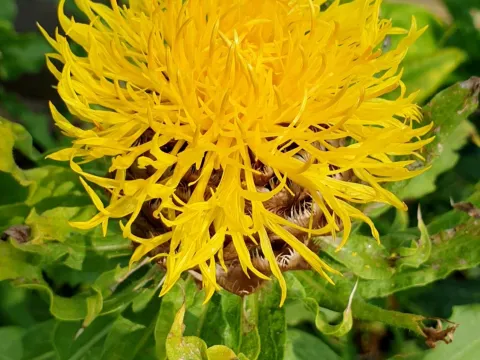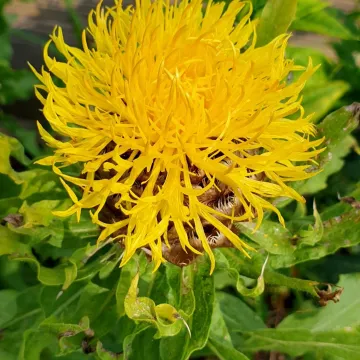
Yellow knapweed
Centaurea macrocephala Muss. Puschk. ex Willd.
Description
Yellow knapweed (Centaurea macrocephala) is a robust perennial flowering plant belonging to the Asteraceae family. It is widely recognized for its large, bright yellow flower heads that resemble globes, making it a distinct and highly valued addition to perennial borders and large-scale landscape designs.
Native to the subalpine meadows of the Caucasus Mountains, this species has adapted to thrive in temperate climates. It is highly valued by gardeners for its remarkable hardiness, structural presence, and ability to remain a permanent feature in the landscape for many years without requiring frequent division or replanting.
Botanically, the plant develops strong, upright stems typically reaching heights of 3 to 4 feet. The leaves are broad, lanceolate, and scabrous to the touch. The plant's standout feature is its massive, thistle-like flower heads, which are enveloped by attractive, papery golden-brown bracts, providing a unique architectural element to the garden.
In terms of cultivation, yellow knapweed requires full sun exposure to maintain its sturdy growth habit. It thrives in well-drained, fertile soil, though it is remarkably adaptable to various soil types, provided they do not hold excessive moisture during winter. It is drought-tolerant once established, making it a low-maintenance choice for many regions.
The primary use of Centaurea macrocephala is ornamental, serving as a focal point in borders or as a component of naturalistic meadow plantings. It is also highly prized in the floral industry as a long-lasting dried flower, as the rigid heads retain their color and structure perfectly after drying.
- Requires full sun for optimal health.
- Prefers neutral to slightly alkaline soil.
- Resistant to most common garden pests.
- Excellent for dried floral arrangements.
While generally hardy, the plant may occasionally be affected by powdery mildew if planted in poorly ventilated or excessively humid conditions. Monitoring for aphids during the early growth stages is advised, although the plant typically withstands minor infestations without significant long-term damage.
Photo gallery